



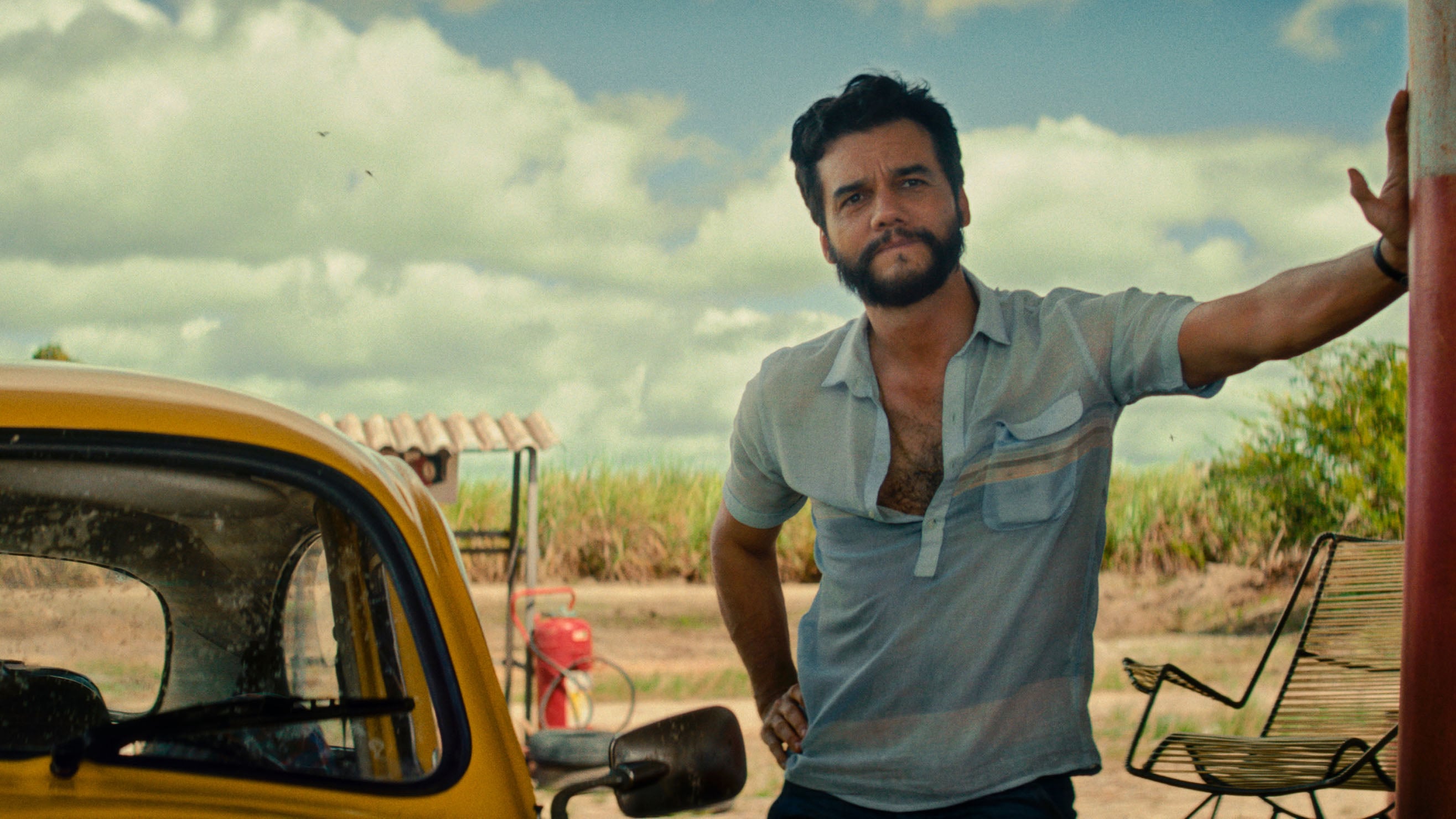
With Kleber Mendonça Filho’s The Secret Agent, the Narcos star cements his international breakout, collecting a Best Actor award at Cannes, a Golden Globe, and Oscar nods along the way. It’s the culmination of a truth Brazilians have known for years: Moura is one of the defining actors of his generation. At the tail end of the most intense press run of his nearly three-decade career, he sits down with Man About Town to unpack the moment.
Is there a more human thrill than swelling with quiet vindication, that smug, chest-filling certainty when you say, “I told you so?” You knew your friend’s move was reckless, that dish a gamble, that swipe right a mistake – and you revel in having been proven right. That is a little of what it feels like to be Brazilian in 2026. As the country’s cool factor rises in international eyes, excitement at home has soared: for the second year in a row, a Brazilian cinematic production is dominating awards season. After Walter Salles’ I’m Still Here made history in 2025 as the first Brazilian film nominated for Best Picture at the Oscars, Kleber Mendonça Filho’s The Secret Agent followed suit. At its centre, Wagner Moura finally receives his flowers, consolidating his international status following roles in Alex Garland’s Civil War, and as Pablo Escobar in Narcos.
Speaking from a London hotel room in January, Moura embodies the contemporary press run: exhausted, exhilarated, and impeccably dressed. He’s the full-package leading man – charming, quick-witted and disarmingly humble, always speaking in the plural rather than the singular when it comes to his wins. A week prior, wearing a custom Margiela suit, he became the first Brazilian to win the Golden Globe for Best Performance by a Male Actor in a Motion Picture – Drama, hot on the heels of his Best Actor win at Cannes. Now, with an Oscar nomination looming on the horizon, there’s temptation to ask about his fashion plans for cinema’s biggest night – but time is precious, and priorities must be set.
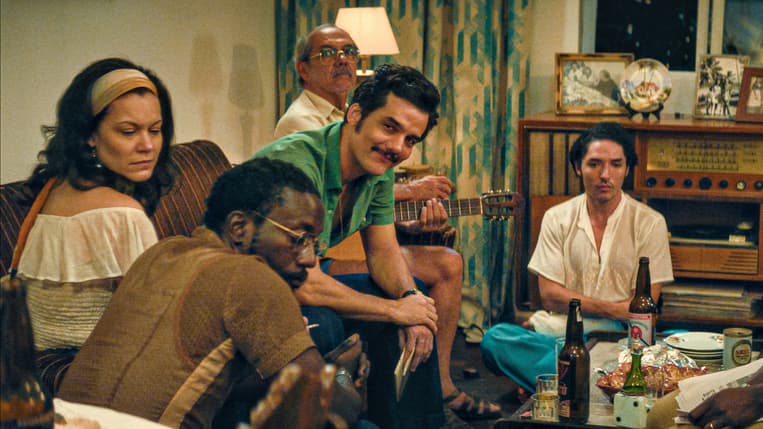
In Mendonça Filho’s fantastical, politically-charged thriller, set during Carnival in the late 1970s at the height of Brazil’s military dictatorship, Moura plays Marcelo, at times Armando, a research scientist who adopts a new identity while navigating political persecution and reconnecting with his son after the death of his wife. The country’s rich culture becomes a character in its own right, the script tinged with Northern folklore through the storyline of Recife’s mythological “hairy leg” pulled from a shark’s belly, that starts hunting the city – an urban legend once used by the press to narrate the violence of the military police under the radar of censorship.
It is a role close to Moura’s bones. The time in Brazilian history has long been a subject of his study, from his explosive directorial debut Marighella – a production delayed by censorship from Brazil’s far-right government in 2021 – to his standing as a generational voice for democracy. At his side was Mendonça Filho, and now, at the tail end of a career-defining journey, Moura sits down with Man About Town to unpack the experience: South America’s cultural richness, the overwhelming reception of the project, and why, at last, Brazil’s time is now. Disclaimer: spoilers to come.
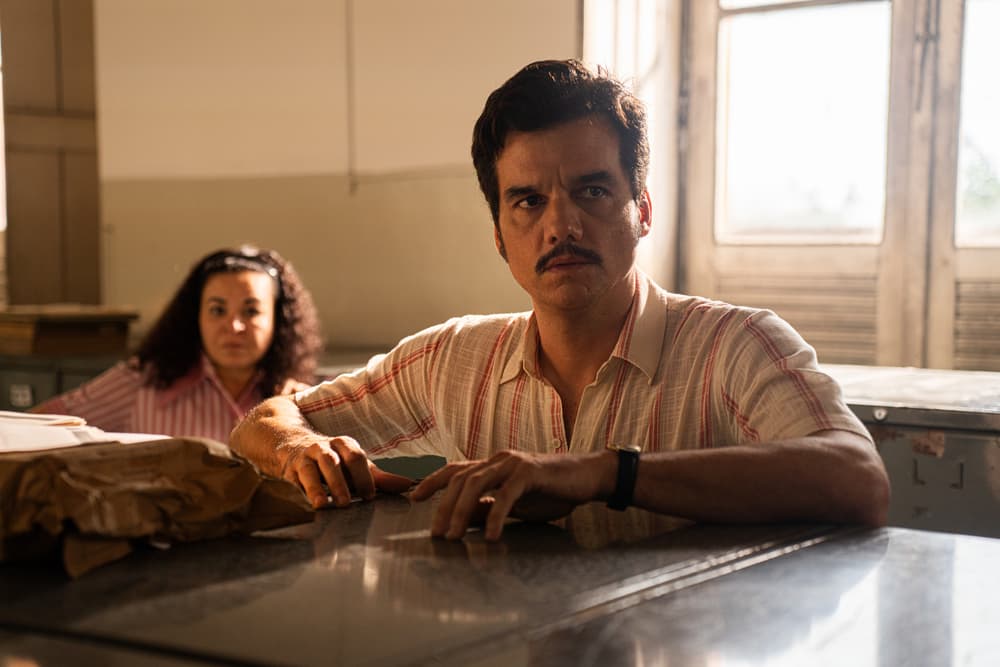
Wagner, massive congratulations on your Golden Globe win and Academy Awards nomination. I speak for a lot of Brazilians when I say we’re all so excited and proud of the film’s success. How has the journey been? How are you feeling?
It’s been great. I mean, what can I say? It’s been amazing. The attention that this film has been receiving since Cannes, it’s been incredible. And that doesn’t happen all the time. So we are very aware of that, and very happy with it. Also very happy with the engagement of Brazilians with the film, as you know well, since last year, since I’m Still Here, the engagement and the way Brazilians are showing how proud they are of [Brazilian cinema]. They feel that the film represents them somehow, and that’s just beautiful.
The last time I saw you was in 2020, and you were speaking to a classroom full of aspiring journalists over Zoom about the hurdles of getting Marighella out into the world. Seeing you now on such an extensive press tour for a film that returns to the same moment in our history, yet has been embraced around the globe, feels incredibly moving. It almost feels like you’ve come full circle.
That’s so interesting. I remember that day. We’ve really made a good turn into a more democratic path [with the election of Brazil’s latest president, Lula da Silva, in 2022], which is our vocation. [Brazil] is a country which its history is, unfortunately, full of coup d’etats and authoritarianism and violence, but I feel deep in my bones that this is a country that has a democratic vocation. When I think about our country, I think about culture. And I think about the Amazon. Two things that are always in peril and in danger. I think about our diversity. You know, how diverse that country is, and how beautiful Brazilian culture is, and I think about the power of the Amazon rainforest. These are the things that make Brazil a very unique and special country. So it’s great to have a government now that is democratic, that likes culture, that likes their artists, and hopefully will help us to preserve that incredible jewel and important thing, which is the Amazon rainforest.
Having watched The Secret Agent with friends who aren’t Brazilian, I couldn’t help but wonder whether they fully grasp the scope of the story – or if some of the Brazilian-ness that makes it so brilliant gets lost in translation. After experiencing this press run on such an international scale, do you think audiences beyond our borders are able to fully understand the depth of it?
I do, and probably your friend also might have some insights that you didn’t have. Because to have a view from outside is also interesting. It’s also an interesting perspective. Like I said, we’ve been, you know, running with this for a while and and throughout this path, I’ve learned so many things about the film, just by listening to people’s reflections. Recently, I realised that this is also a film about infamy, [something] that I hadn’t thought about. You know, the way Kleber chooses to display how my character died, through that newspaper, I was like, “Well, this is also a film about infamy, about a character that gets killed twice, he gets killed and then his reputation gets killed.” That’s an example, but of course, for Brazilians, it has a different taste. We both know well the logic of what it is to be Brazilian, which is crazy, chaotic and beautiful at the same time.
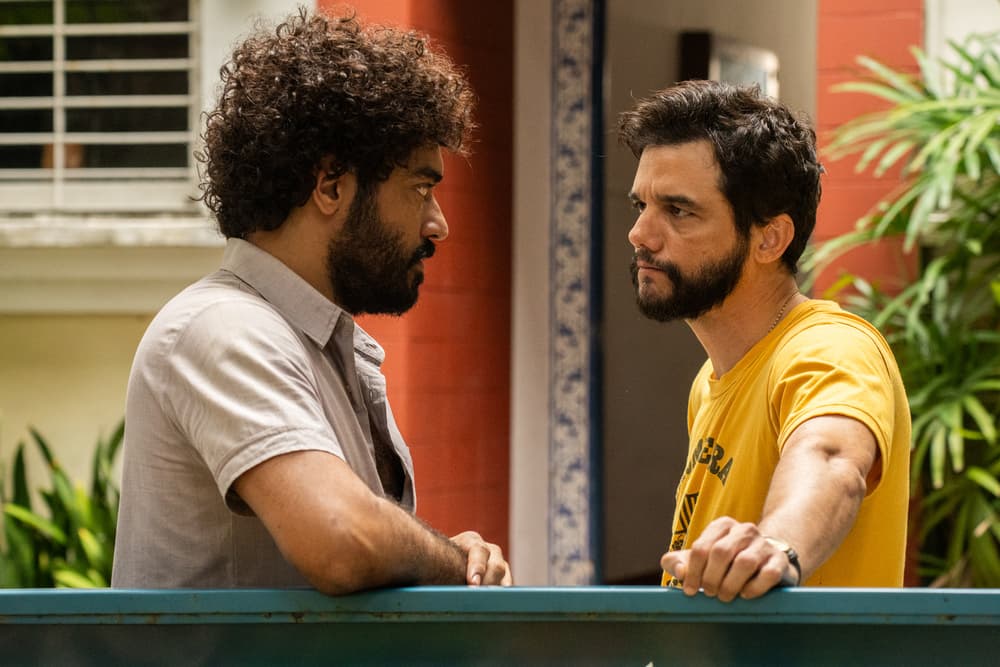
I particularly love the leg storyline, and the way the film leans into something almost surreal and fantastical while still being rooted in such a dark and upsetting chapter of our history. It’s a story about Brazil in the 70s, during the military dictatorship, but that context becomes more of an atmosphere than the central character. Was that something you and Kleber discussed at length before starting the film?
Yes, that was Kleber’s intention. I myself, as you know, directed a film [Marighella] about a freedom fighter, a guerrilla guy who was like, “I want to overthrow that government”. I have so much admiration for a generation that decided to do something about that authoritarian regime. But the main victims of a dictatorship are people like my character in this film. Or like Fernanda Torre’s character in I’m Still Here, people there are just trying to live their lives. And what I like about these two characters, and this is the first time that I’m thinking about this is that, both these characters, they stick with their values. I was reading the other day someone talking about how to fight fascism, and they [describe] how it’s not a big blow that’s going to overthrow fascism or authoritarian regimes. It’s about the day to day acts of resistance, sticking with the values that you have. If your values are not in tune with the values of the regime, or whatever is around you, these become a big demonstration of rebellion and, according to this scholar, those are the things that overthrow governments. So I find these characters deeply interesting and powerful.
Tell me a bit about your creative partnership with Kleber. You’ve been working together for quite some time now. What have you learned most from each other over the years, and what was the overall experience like on this film?
Just great, man. I mean, I met him 20 years ago in Cannes, he was a critic back then, and I started to watch his short films, and have gained such an admiration for him since. Especially since I saw his first feature film, Neighboring Sounds. And then we became friends, and started to talk about working together, and we were bumping into each other in film festivals… But it’s fascinating how politics brought us together more than anything else. It was the fact that we were both very vocal against Bolsonaro [the 38th president of Brazil from 2019 to 2022], and the fact that we both suffered the consequences of that, that [really brought us together].
When I received the New York Film Critics Circle Award, I thanked Bolsonaro. I don’t think Kleber was happy with that, but I did, because I think if it wasn’t because of him, I don’t think we would’ve done this particular film. This film is a result of our shared perplexity over what was going on in Brazil from 2018 to 2022. The Secret Agent became a very personal thing for me. This character is a lot of myself and a lot of how I felt during that time when my film was censored, and all that nonsense was going on. When someone was trying to bring back the values of the dictatorship to Brazil in the 21st century, it was a big “WTF?”, you know? And Kleber and I think Brazil in a very similar way, politically. We are very different men, but we see the country and our roles as artists in a very similar way. I think the greatest way to get to know someone is working with them, and [during this process] we’ve become even closer. And now I can say Kleber is a very good friend of mine.
How did you approach the research for this role? Did you feel you needed to spend a lot of time understanding who this character was, or was it something you could slip into more instinctively?
You know, I had researched a lot about Brazil during the dictatorship when I shot Marighella, what Brazil was, socially, economically, politically, culturally back then. But, I was born in ‘76, during the dictatorship. And it doesn’t feel that long ago. The dictatorship ended in ‘85 but it didn’t really end in ‘85. The echoes of [that time] are still very present in day-to-day life in Brazil. Not only the dictatorship. Brazil was the last country in the world to abolish slavery, and that’s pretty much still present in our daily life there. Colonialism, imperialism and misogyny, homophobia, elitism.
After the leadership ended, with the constitution ‘89, that was so liberal and awesome, there was a dream of a country that sort of buried our past. And that’s not how it works. I think that Bolsonaro emerged as a physical manifestation of all these [flaws] that make Brazil what Brazil is. But Bolsonaro didn’t come from Mars, you know? He’s not an alien. He is pretty grounded in the worst of our history. But there is also the best of our history. Which is the progressive country, the diversity, the culture, the people that are liberal and empathetic… and, again, I’ll go back to this because I think it defines Brazil a lot, we own a very big chunk of the Amazon rainforest, which is going to become increasingly important to the entire world as climate change is unfortunately progressing. We are complex as a nation, and complex, of course, as human beings. Tom Jobim says this phrase that I love, “Brazil isn’t for beginners”. And this film, in the end, displays our love for the country, for our country.
And what do you think having this film in the international spotlight symbolises for Brazilian cinema right now? Does it make you hopeful about what’s to come?
Definitely. Culture and democracy walk together. And I think to make films, to produce beautiful things, it’s a Brazilian thing. It feels naive to say this, but that’s how I feel. We’re this big, gigantic country in South America that speaks Portuguese. From southeast to northwest, we’re diverse. We have the most wanted passport in the black market, because anyone can look Brazilian. Salvador is the blackest city in the world outside Africa. The South is very German and Italian, we have an enormous Lebanese and Japanese communities. And then we have the native Brazilians, which are reclaiming, as they should, their political power, and saying “enough of white people deciding about what’s going to happen to [our lands].” And so this is all happening at a very exciting time. And then cinema goes in the same direction. We have a tradition of making political films even before the Cinema Novo movement. What I think it’s beautiful about Brazilian cinema is that it’s a cinema that is in search of identity. This is a young country. It’s not like Europe that has, you know, that’s just been around, or the United States. South America in general, the cinematography is [about] people looking for an identity. Therefore, there are so many documentaries coming from Brazil, asking ‘Which country is this? What is this country? What are the issues and what are the beauties of this place?’ There are great Brazilian films [out] right now. [Director] Gabriel Mascaro just recently won his award in Berlin [for The Blue Trail], and we had I’m Still Here last year. Manas is a film that’s performing super well in film festivals. Things are going well for us.
After watching The Secret Agent, for readers who are curious to explore more of Brazilian cinema, what are three of your favourite films that you’d recommend?
I would say Eduardo Coutinho’s Twenty Years Later. Barren Lives, by Nelson Pereira dos Santos, is a very beautiful film. I love Walter Salles’ Foreign Land, with Fernanda Torres, that’s another beautiful film from Brazil. You said three, right? Because I could keep going…
![Picture of “Anyone Who Knows Me Or Knew Me When I Was Younger Would Be Laughing At The Idea [Of Me Being A Fashion Campaign Face]”: Corey Mylchreest On Becoming A Fully-Fledged Leading Man](/_next/image?url=https%3A%2F%2Fadmin.manabouttown.tv%2Fwp-content%2Fuploads%2F2026%2F04%2Fg-768x338.jpg&w=3840&q=85&dpl=dpl_s7wFmvZo5YcTNCjx5sb4PUUzKfcj)

![Picture of “I [Always] Knew That I Wanted To Do Something With This Family Story, But I Didn’t Know What”: Nelio Biedermann On His Juggernaut Novel Lázár](/_next/image?url=https%3A%2F%2Fadmin.manabouttown.tv%2Fwp-content%2Fuploads%2F2026%2F04%2Freoefg.jpg&w=3840&q=85&dpl=dpl_s7wFmvZo5YcTNCjx5sb4PUUzKfcj)

![Picture of [I Asked The Night Manger] Director If I Could Make [Teddy] Sexually Ambiguous – It Breaks The Cliché Of The Narco”: Diego Calva Guides Édgar Ramirez Through The Night Manager](/_next/image?url=https%3A%2F%2Fadmin.manabouttown.tv%2Fwp-content%2Fuploads%2F2026%2F04%2Fsfrerfer.png&w=3840&q=85&dpl=dpl_s7wFmvZo5YcTNCjx5sb4PUUzKfcj)
![Picture of “My Therapist Was Like, ‘Oh, You Know [Scott Hunter] Is Not You – It Was Just Simmering”: François Arnaud Is Riding the Heatwave](/_next/image?url=https%3A%2F%2Fadmin.manabouttown.tv%2Fwp-content%2Fuploads%2F2026%2F04%2Fwdfqgr.jpg&w=3840&q=85&dpl=dpl_s7wFmvZo5YcTNCjx5sb4PUUzKfcj)