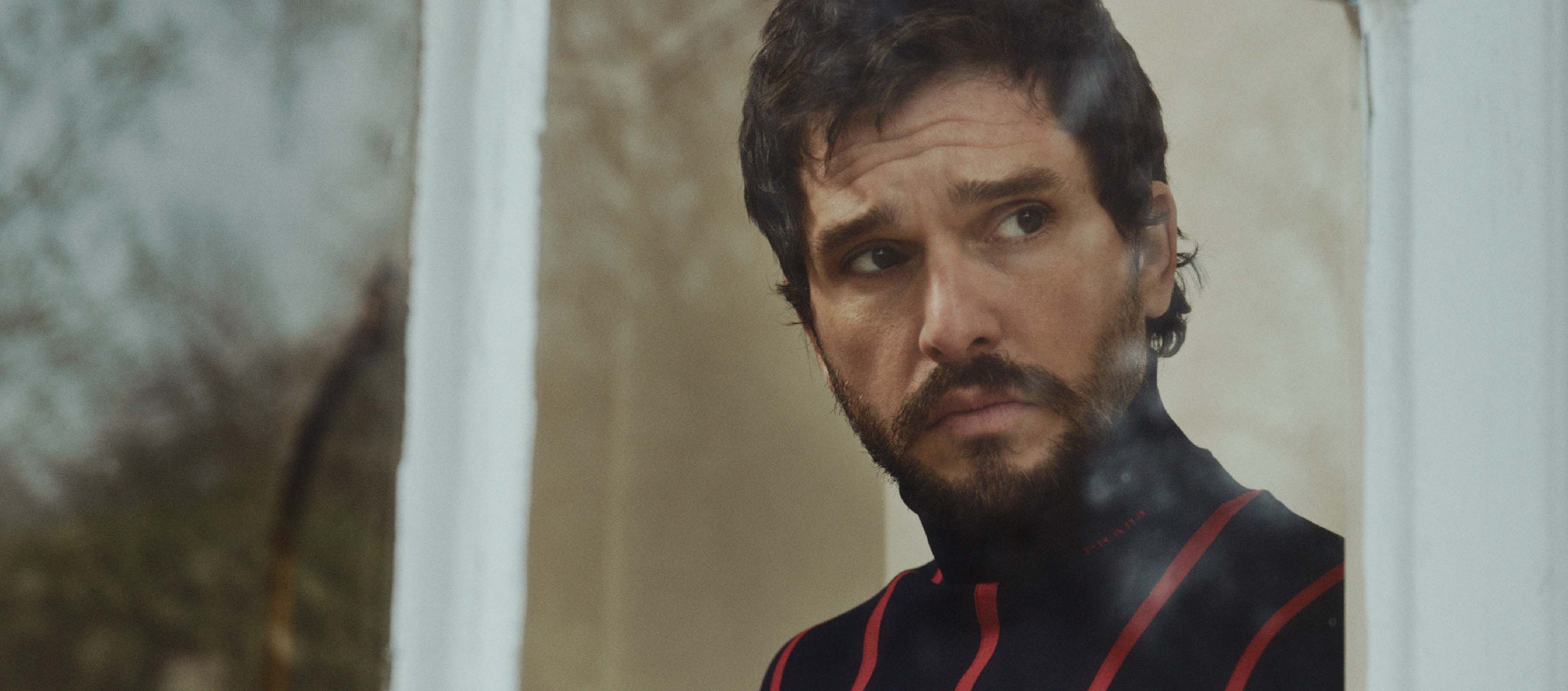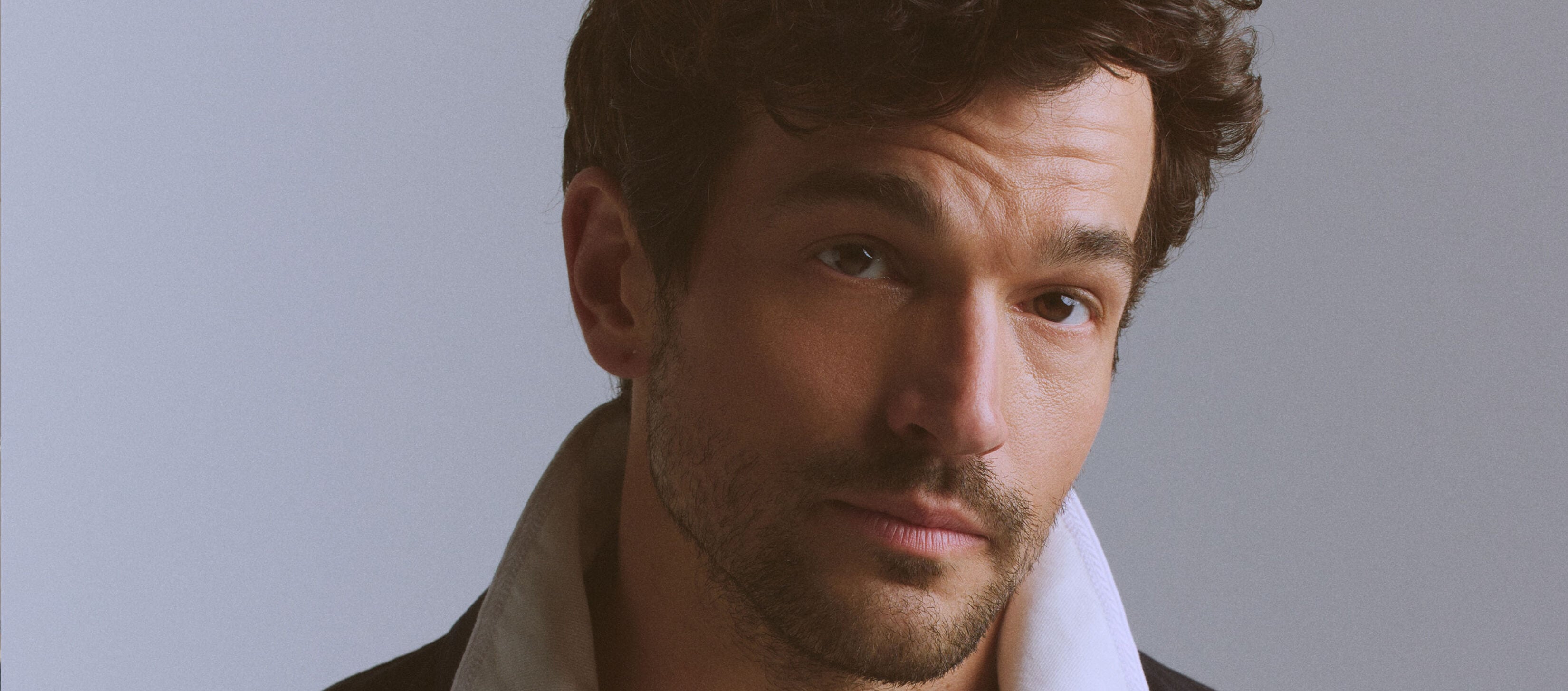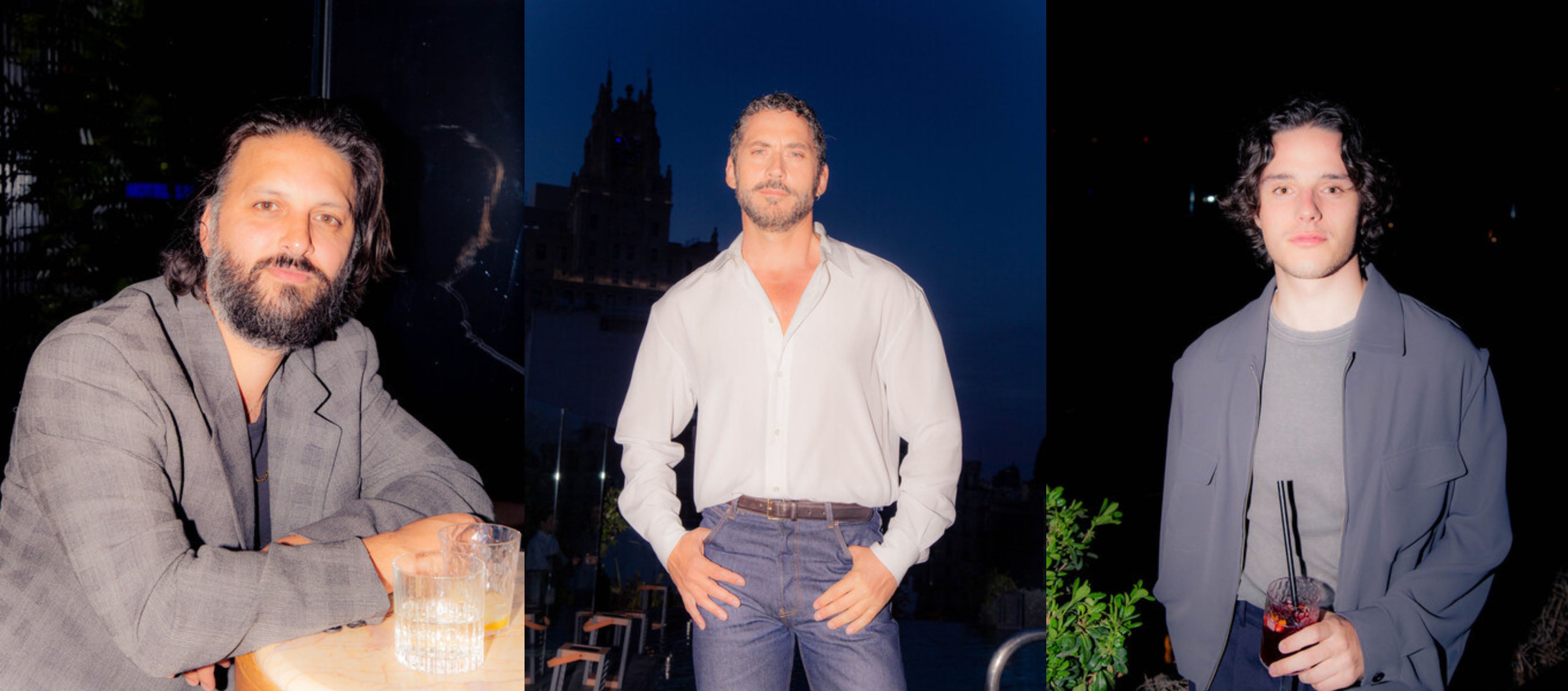



After engulfing East London in recent years with sonic accounts of queer life, with upcoming debut mixtape, this is where the British artist’s bulletproof synthpop reaches the masses.
Mononymous stage names have served the pop pantheon in great stead. From Madonna to Morrissey, Rihanna to Robyn, when a surname (or first name) is put to one side, golden relationships with the charts can follow suit. Buckinghamshire-hailing Tsatsamis (real name Peter Tsatsamis-Cooper) opted to run with the most distinctive component on his birth certificate – his Greek mother’s contribution to his double-barrelled surname – as he set about clinching similar victories. And it was all going swimmingly. “The SEO is amazing,” he notes.
However, then came the challenge that those pop predecessors’ early careers were unburdened by: finding an Instagram handle. “Someone else had ‘@tsatsamis’,” he tells me over coffee and a ginger juice in Bethnal Green. “I was like, ‘That’s weird.’” He initially settled with tacking on an underscore, but he knew bagging the username in its unadulterated, most-searchable form would only support his music – gold-standard, ’80s-doused synthpop, with lineage spanning Bronski Beat to Katy Perry and George Michael – on its path to its rightful crowd. “I messaged the account, and I did this whole spiel,” he explains. “I was like, ‘It would mean so much to me. I’m an artist, blah, blah, blah.’” The user agreed to hand over the account name instantly. “And then he was like, ‘Where are you from?’” It transpired that he was Tsatsamis’s second cousin. “I was like, ‘What the fuck!?’
The pair are yet to meet, but in his newly-discovered family member, Tsatsamis also gained a fan. His next challenge is guiding those among his growing legion of supporters less au fait with Greek pronunciation on how they can accurately herald their new favourite queer-pop prince in conversation. The wordplay of his upcoming debut mixtape’s title Tsycophant – inspired, as you might expect, by sycophancy – might just be the ticket to making those phonetics crystal clear. “I was like, ‘Okay, adding the “t” at the beginning fits with the brand world,’” he smiles, “and it helps people pronounce Tsatsamis!”
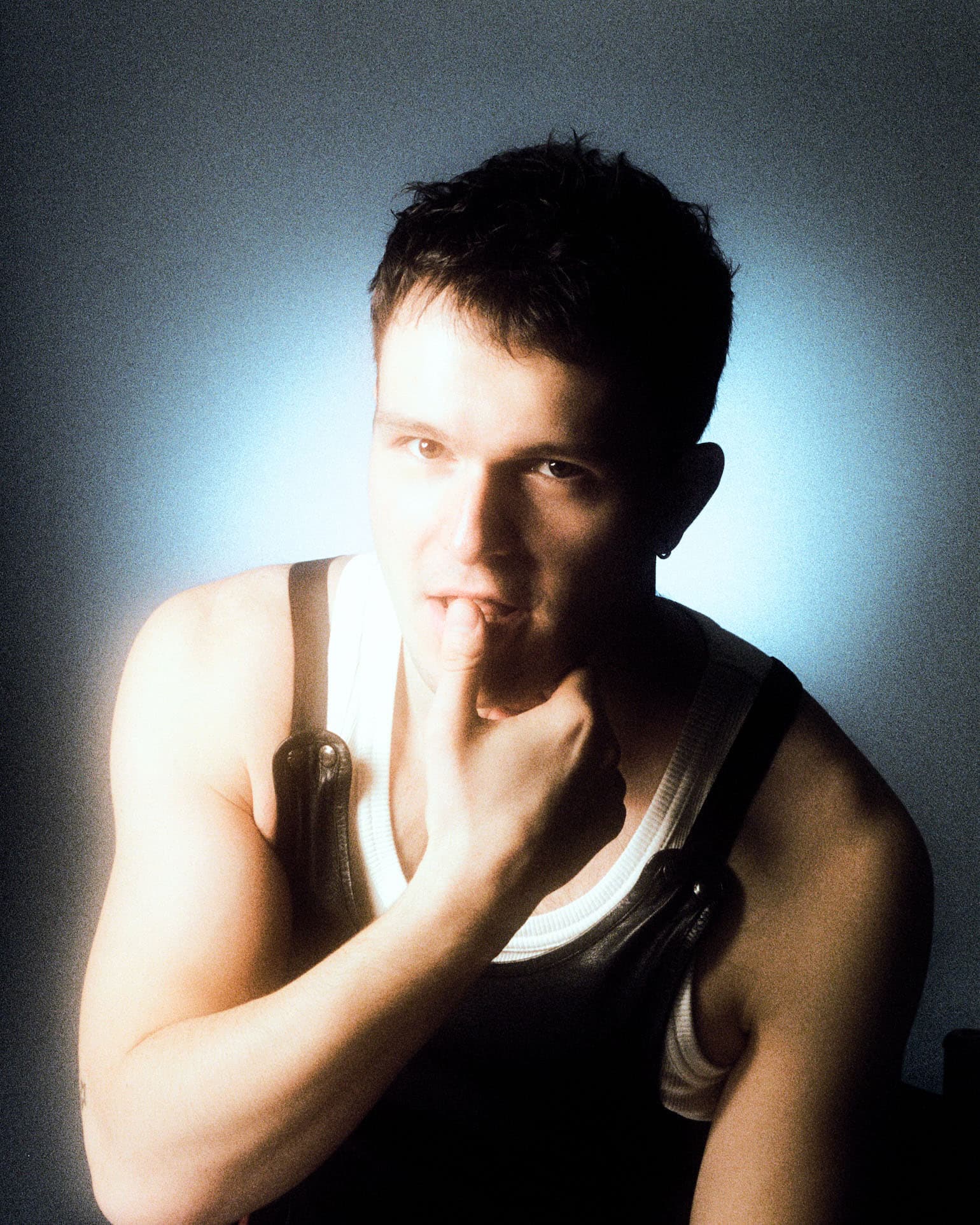
The project releases in April and was led by blitzkrieg single “Recreational” – an account of allowing oneself hedonism that’s as ecstatic as it is sensual – released on February 13th. The track came almost two years after Tsatsamis’s breakout EP “Our Shame”, which spawned kinetic banger “Faith”, earning the artist a steady dose of virality among London’s queer scene and a consolidating run of shows and festival slots. Just two years before that, he’d dropped debut cut “Good Time”, a guilt-punctuated immersion into Soho’s queer nightlife – crafted from his childhood bedroom, when lockdown forced him to retreat home after his graduation from a history degree. “For a long time, I had been writing music, trying to be ‘this’ person or being like, ‘A gay artist writes about “this” stuff,’ or ‘If a pop song wants to be big, it has to say this thing.’ “Good Time” was the first time when I was like, ‘Okay, let me just write about something which is just very matter-of-fact and true.’”
His music thrives off the sonics of 40 years ago – a falsetto with celestial qualities to rival Jimmy Somerville, puckish production with the verve of the Pet Shop Boys, and songs authored with emotional currents that envelop like George Michael’s. However, Tsatsamis’s choice to study bygone eras more generally in higher education was less a labour of love. “It felt the closest to an arty [subject] in academic form,” he explains. His parents wanted him to get a “solid” degree, and he only really got his first semblance of confidence to sing publicly as school reached its conclusion, so unsurprisingly, music didn’t make it onto the UCAS application.
It didn’t fade from the picture completely, however. “I would be in the library, supposed to be writing an essay, and I’d be making something on Logic,” he laughs. He did release three demos in second year. “Everyone was like, ‘Oh, these are really good,’ but then it never went anywhere.” You would imagine Tsatsamis to be one of those students who aced their essays in spite of study hours compromised by distraction, however. The Tsatsamis of today has the get-up-and-go and instant warmth of a high-achieving head boy – albeit one who might apply the same welly to organising the illicit prom after-party as fronting a school assembly. He tells me he’s the one who rallies his friends for a walk in Victoria Park on a hangover day, to ensure everyone gets their daylight intake. But he also admits that if he completed his Erasmus in Berlin now rather than when he was 20, it would be an altogether more intoxicating affair. “I would get up to things which are very different to what I was getting up to back then,” he smiles.
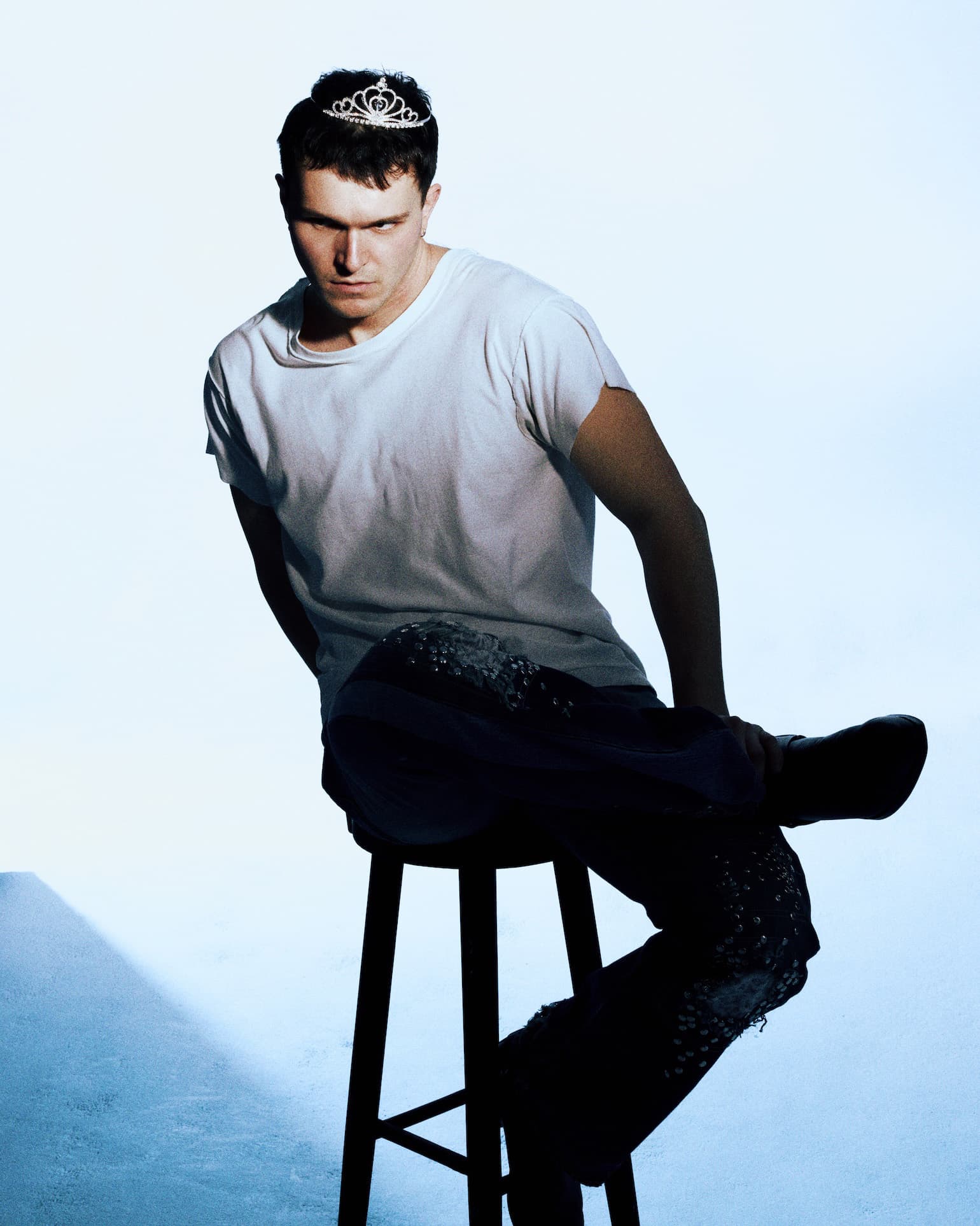
He owes that shift, perhaps, to his arrival in East London following his pandemic-induced stint at home, and consequently, his induction into one of the UK’s most creative and hedonistic queer communities. “That was the first time when I suddenly had loads of gay friends,” he explains. Up until then, his network of gay friends was limited to “just the few people that I’d picked up along the way and was lucky to know. Now I’m part of this social scene that’s a bit high school-y.”
Where his previous work – not least “Our Shame” – dealt with the self-loathing and internalised stigma that lingers in many a gay man into adulthood, Tsycophant finds its setting in the afterglow that follows, experienced by Tsatsamis and many as a delayed adolescence, in which partying, community and sexual freedom can be finally embraced in full. “I wanted to write about something that’s really authentic to where I am now,” he explains. The project comprises windows into that life in the myriad forms it takes – from a clubland infatuation that keeps fading out of view, to darkroom explorations, a love song simply laced with melodrama and an anthemic take on kissing one’s friends. “Literally, I could tell you the exact location [in East London] for each song,” he smiles.
Thematically, the unifying thread of Tsycophant and root of its title is the way performance in and out of his artistic persona permeates its tracks. “When I did a tour a couple of years ago, I was so inspired by songs that I wanted to stand up and perform,” Tsatsamis explains. “And I found that so much of the music was inspired by me being performative in social or sexual situations. I feel like I can be very sycophantic,” he expands. “I love this idea that if someone is a sycophant, what lives behind that? In terms of their personality, toxic traits, all of those things that bubble underneath. I can be toxic, or I can be manipulative, but it comes from a good place. I think that intersection can be really interesting.”
In terms of performance, you could say “Recreational” is the Tsatsamis experience with all the trimmings. “This song feels like the most in-your-face, energetic, brash, performative of all of [the tracks on Tsycophant]. There are so many songs on the mixtape which I wanted to be singles, but I think it would’ve felt weird if the project came out and this didn’t have a moment.” The track is one example of the way that shame, even if no longer the defining tenor of his life, still seeps into Tsatsamis’s perception of his life. “The opening verse is dealing with struggling to give myself hedonism when I clearly want it. Someone can psychoanalyse that,” he laughs. It was the last song he wrote for the project, last September, following a high-octane, indulgent festival season. “Obviously, I had a lot of new inspiration,” he nods knowingly.
The fact that the last track Tsatsamis made is the body of work’s most maximalist is a fitting emblem for the expansion that Tsycophant’s creation was defined by. That didn’t always mean literally increasing decibels – rather, in some cases, merely the fact that he decided to bring collaborators into his writing process for the first time. “[This project] felt like a journey of learning how to be an artist with other people,” he says. He spent time in Lisbon with Max Wolfgang, currently most notable for penning multiple tracks for Olivia Dean’s 2025 global breakout album, The Art of Loving, as well as Mark Ralph (Zara Larsson), Sakima (Tate McCrae) and Pat Alvarez (Rose Gray).
Smiths-indebted high-stakes love song “First One To Go”, based on a poem Tsatsamis had written for his boyfriend, was the result of a session with Wolfgang. “The poem was me being like, ‘If you die when you cycle to work, I can’t go on.’ And then I was just quite obsessed with this romantic idea of being really morbid but in a very, ‘I love you so much that I would die for you’ way.” It’s a narrational journey to match Tsatsamis’s idea of the “perfect pop song” – Katy Perry’s “Teenage Dream”. “I love the idea that where you start that song is different from where you’re at by the end,” he explains. “One thing I always still try to do is just have a very poignant, cutting lyric,” and, for him, Perry’s “You make me feel like I’m living a teenage dream,” is a case in point. Tsycophant’s similarly evocative “Think About You” – perhaps its highlight – carries as compelling a narrative arc, its lithe tracing of a situationship’s timeline sharing droplets of whatever plaintive pop potion so delicately made Robyn’s “Dancing On My Own” her masterstroke. “Girl, that song…” he says when I bring up his work, its effects evidently not lost on him despite the fact he penned it. “I feel like I really captured the exact feeling I had where I was like, ‘I’m obsessed with this person, and I’m thinking about them so much and reliving this experience over and over, and I’m kinda going crazy, but I’m kinda loving it.”
His time creating alongside some of pop’s 2020s writing powerhouses reconfigured Tsatsamis’s perception of and approach to his own composition abilities. “Beforehand, it would be quite a gruelling [process] to finish a song, whereas now I’ve learned a lot just about how to write.” In the past, he would fixate on details for years, engendering creative stasis. However, now he can surpass that. “I feel like I can just go in and write songs, make more and pick the best ones.” And, he’s as unabashed as ever in his account of queer life – a vantage point he’s been working towards in the four years since he immersed himself in the work of the likes of Michael, Somerville and the Pet Shop Boys when that stint back home in lockdown offered him capacious listening hours. “‘They’ve been singing about [queerness] for like 40 years,” he recalls thinking. “The least I can do is be honest and sing honestly.”
He remained unruffled during Tsycophant’s creation process against the pressure to maintain the winning streak that has led him to his status as one of London’s most promising pop boys of 2026. However, now, as he awaits the project’s transition to becoming public property, “I’m like, ‘Fuck, this is when we’ll see,’” he laughs. He plans to switch his phone off and head on a mini-break when that day arrives – Margate is currently in his sightline. “But there will definitely be nights out,” he caveats. And then, he’ll likely head straight onto the album. “This mixtape is obviously a whole project within itself, but I really see it as kicking the door open to the [Tsatsamis] project. And the album’s the next big statement. I’ve got the title. I’ve got the concept. The vision board… it feels in focus.”


![Picture of “[After Boots, People Said:] ‘You’re So Nice, I Can’t Believe That You Play Such A Freaky Sociopath’”: Angus O’Brien Is Marching On](/_next/image?url=https%3A%2F%2Fadmin.manabouttown.tv%2Fwp-content%2Fuploads%2F2026%2F05%2FANGUS-OBRIEN-hero-image-768x341.jpg&w=3840&q=85&dpl=dpl_s7wFmvZo5YcTNCjx5sb4PUUzKfcj)
![Picture of “Anyone Who Knows Me Or Knew Me When I Was Younger Would Be Laughing At The Idea [Of Me Being A Fashion Campaign Face]”: Corey Mylchreest On Becoming A Fully-Fledged Leading Man](/_next/image?url=https%3A%2F%2Fadmin.manabouttown.tv%2Fwp-content%2Fuploads%2F2026%2F04%2Fg.jpg&w=3840&q=85&dpl=dpl_s7wFmvZo5YcTNCjx5sb4PUUzKfcj)