

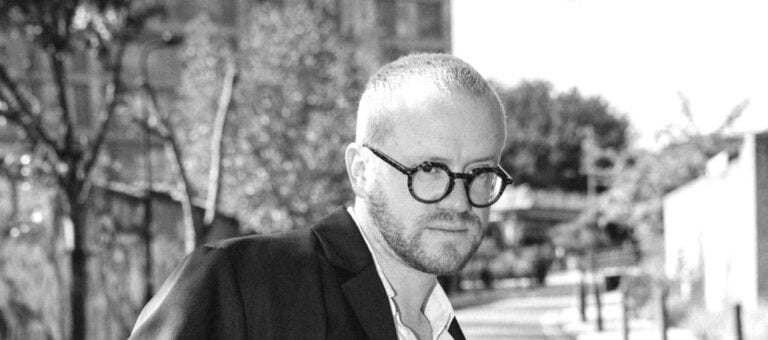
LGBTQ+ life isn’t compatible with small towns – at least that’s what the records will tell you. However, as John Grindrod’s new book spotlights, queer people haven’t just always been part of British suburbia, they designed it.
It was almost over before it even began. When John Grindrod set about the archives of London’s Bishopsgate Institute to begin research for his fourth book, Tales of the Suburbs: LGBTQ+ Lives Behind Net Curtains, he appeared to meet a dead end. The cultural centre has long held one of the most extensive records there is of British LGBTQ+ life, but his search attempts for stories lived beyond the big city were to no avail. “I’d basically be tapping in search terms to try to find something, but because no one’s ever categorised anything in an archive as ‘queer suburbia’, it just doesn’t exist as a tag,” he tells me.
The lack of evidence of queer existence among the cul-de-sacs and commuter belts of the United Kingdom wouldn’t have been much of a surprise for a younger Grindrod. He grew up on a council estate in New Addington in the ’70s and ’80s, five miles southeast of Croydon, as the sole gay person in the area – at least through the eyes of his childhood self. “The idea that there were any gay people in New Addington felt like a complete, unbelievable fantasy,” he tells me, over coffee in January, five minutes on foot north of Soho. Now a four-time published author, Tales of the Suburbs is the first of Grindrod’s books dedicated to queer life. It peels back the curtains LGBTQ+ existence away from the metropolis has been so often concealed by, presenting a patchwork collection of stories built from archival findings and original interviews. From desolation to defiance and downright comedy, it uncovers the endless textures of queer life lived stealthily in society’s so-called bastion of conformity.
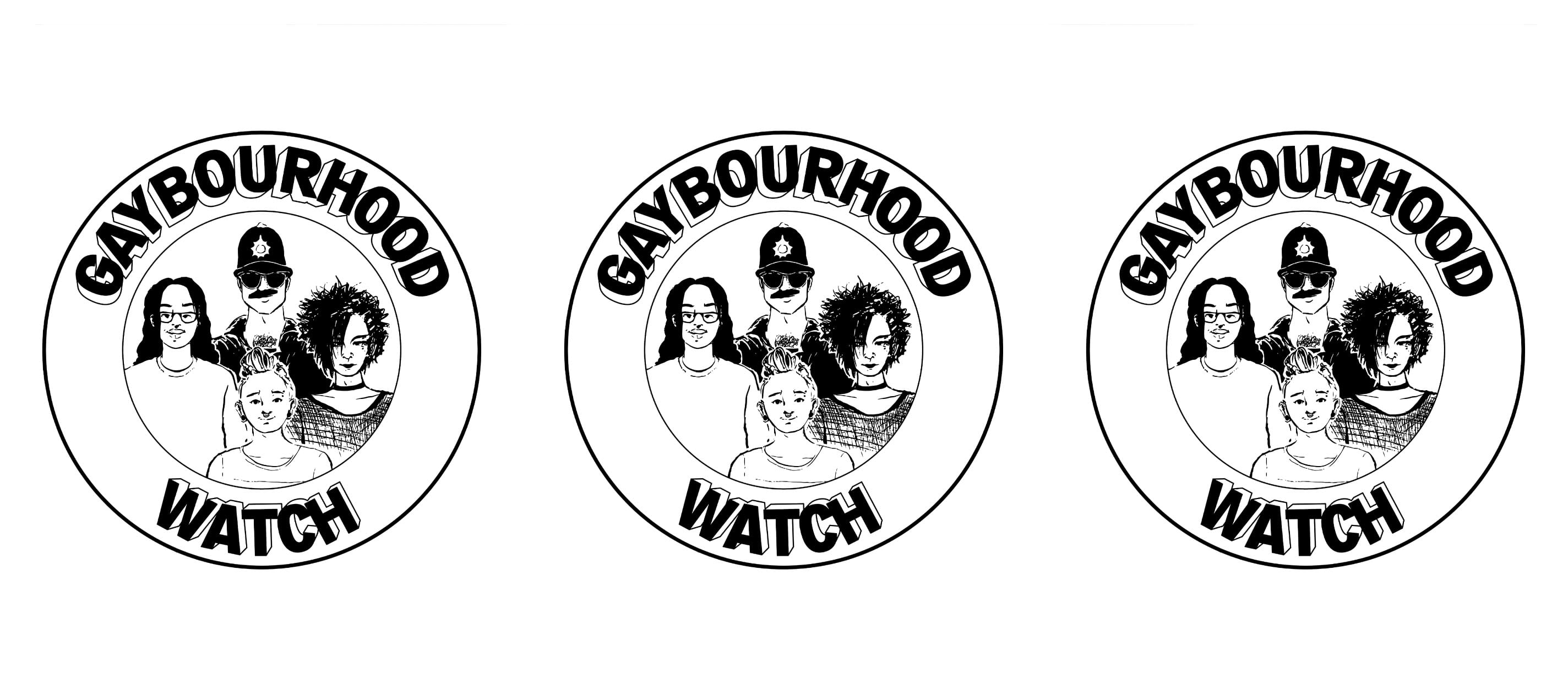
When Grindrod was growing up in New Addington, he would pretend to be invisible as he navigated its uniform streets. “That’s the thing about the suburbs – everyone feels hidden away, regardless of who you are or what you are. The suburbs just close you in a big cupboard.” Whether you’re in that cupboard because you’re in the closet or beset by another of society’s taboo idiosyncrasies, what Grindrod knows as an adult is that suburbanites can really keep a secret. Almost as tightly as the Neighbourhood Watch keeps tabs on any unidentified white-panelled vans lingering too long in the close. So he knew queer stories belonged in the small-town history books, they just didn’t often find their way into them.
He returned to the Institute’s search bar, this time narrowing his enquiries closer to home, simply typing in “Croydon”. It was from there that he was reintroduced to what would become Tales of the Suburbs’s most prominent recurring character – The Croydon Area Gay Society. Founded in 1971, Grindrod had attended a couple of meetings in the early ’90s, after it dawned on him that queer comrades did, in fact, walk among him in his local area. He managed to find decades-old Society newsletters, stories from which he threads throughout Tales of the Suburbs. “It was like an amazing little time capsule.” He contacted the club’s present-day custodian, who met Grindrod for coffee alongside its treasurer. “The treasurer said to me, ‘I think I knew your dad.’ And it turned out that he basically lived and still lives one street away from where I grew up in New Addington. Him and my dad belonged to the same gardening club. How suburban is that?” The discovery dissolved, once and for all, any of Grindrod’s youthful miscalculations of being the only gay in the village. “Here was this guy who lived around the corner, who my dad knew. I found it amazing.”
Whether in New Addington, Bearsden or Bilton – another major discovery for Grindrod as the book came together was that despite its instantly recognisable tropes, perceptions of suburbia vary broadly for each who has called it home. “I felt like I understood it, because I felt really part of it,” Grindrod admits. His work has also touched on it before – his second book, Outskirts, studied the green belt. “But the version that I had of suburbia was really different to everybody else’s. Everybody’s got their own private suburb in their head that they’ve experienced.” What did unite all interviewees was their sense of outlier status. “Every [queer person I spoke to], no matter how they grew up, felt marginalised and on the edge – either of the suburbs themselves or on the edge of life.”
Few in the book experience isolation like Hester Caulton. In some ways, she’s at the nerve centre of her Staffordshire community in 1968. The social currency that comes with her role as the local headteacher could rival a Bupa policy if written into the Perks & Benefits section of a 21st-century contract. But her concealed lesbian identity makes that and her mere job itself feel precarious. In an extract Grindrod uncovers from short-lived lesbian publication Arena Three, she writes: “If the parents of the children of my school learned that I was a lesbian, and happy to be, their immediate reaction would be one of disgust. In fairly small communities such as this, scandal runs like a flame through straw. Despite my sincere efforts to give all that is best to my pupils, parents would believe that I would ‘contaminate’ their children.” As Grindrod tells me: “She’s isolated because she’s in this very senior job, so there’s no one she can talk to in that network. And she’s isolated geographically, feeling like the community wouldn’t understand her because of who she was.”
The two-page micro chapter that houses Caulton’s reflections is just one example of Grindrod’s archive-combing to uncover latent stories. They’re contrasted by his interviews, the subjects for which were gathered in piecemeal fashion – via social media, through friends of friends and in the wake of his previous work. Grindrod’s three-book bibliography preceding Tales of the Suburbs saw Outskirts sandwiched between 2014 debut Concretopia (a deep-dive on post-war architecture) and 2018’s self-explanatory How to Love Brutalism. The specialisms of his previous releases would see him giving talks in and around Tales of the Suburbs’ creation. “Sometimes someone would come up to me [afterwards] and go, ‘Oh, I heard you talk about the [new] book you’re working on. That’s my life, that’s me.’”
One of those people was Robin from Snaresbrook, who in 1985 became one of the first volunteers for the newly-launched Terrence Higgins Trust. He manned the phones of its Acton call centre but primarily acted as a buddy to a PWA (person with AIDS). Himself hailing from North London suburbia, his volunteering took him to other layers of London’s fringes in support of men, mainly in their 20s and 30s, dying from the disease.
His story is one of a few moments in which Grindrod highlights the underexplored ways suburbia intersected with the AIDS crisis. Cultural depictions of the era commonly find their settings in the city hospital wards serving the gay communities of the likes of San Francisco, New York or London – the urban centres smalltown boys would often feel urged to escape to by adulthood. However, as was deftly conveyed in 2021 drama It’s A Sin, by the time many sufferers’ disease deteriorated, they would quietly disappear from big city party scenes and friendship groups, returning to the communities they dreamed of outgrowing a few years prior, to be cared for, discreetly, in their childhood bedrooms.
And there were, of course, queer AIDS sufferers who had settled in the suburbs long before the disease took hold. Grindrod met Cara, whose dad – an anomalous openly gay 1980s Somerset farmer – made a life in Taunton after his divorce from her mum. When Cara was eight, her dad’s partner Steve became one of the first people to have AIDS officially recorded on their death certificate in the UK. Cara’s memories of visiting him are centred in a local hospital in which Steve lay cordoned off from other wards due to fears of transmission. The low-profile way the AIDS crisis infiltrated smaller communities, for Grindrod, is a paragon of suburban secrecy. “It highlights it, the way that stuff could be going on, and then the people next door just don’t even know.”
Grindrod ends Tales of the Suburbs on Cara’s story, an account that is all the more poignant because prior to the AIDS crisis’s upheaval, the queer oasis she lived in with her dad, in spite of rubbernecking neighbours, was one abundant in joy. Her parents remained friends, and she experienced “wraparound” love from both, as well as from her dad’s milieu. She got to know his partners and friends from the local underground gay nightclub, subject often to police raids. “I was raised by some incredible gay men,” she tells Grindrod.
The illicit nights Cara’s dad experienced in Taunton clubbing are a far cry from those on offer at Pink Punters, opened just after the turn of the millennium and still operating today. The Milton Keynes club would have a shoo-in to be the flagship of UK suburban queer nightlife should it ever be contested. A dedicated rainbow-emblazoned double-decker bus swallows revellers on busy nights from around the town’s estates before depositing them at the venue on the commuter hub’s outskirts. Milton Keynes’s boasting of such a sophisticated queer party offering is no surprise. It was, after all, one of the first places to be LGBTQ+ friendly from its inception. The freshly-launched local branch of the Campaign for Homosexual Equality received a grant from the town’s development corporation in 1975 to secure it a permanent meeting place. “It’s gorgeous that that was something that they just thought about at a really early stage,” Grindrod says. “Within five years of them starting the town, they were already like, ‘Hey, we could get this gay and lesbian local group,’ and that became a really significant thing for the community.”
It is fitting, therefore, that it’s Milton Keynes where Grindrod now resides. His list of adulthood addresses followed a continuum from Croydon, gradually closer to London’s centre, but after meeting his partner, a Milton Keynes local, he moved in with him during lockdown and hasn’t left since. It makes Grindrod one of his book’s examples of suburban escapees, who have ended up back, by free will, later in adulthood. Grindrod’s childhood invisibility cloak is no longer deployed as he negotiates his neighbourhood. Instead, he embraces his “suburban dream”. Looking back, he thinks suburbia’s less-than-appealing depiction in British culture during his childhood – from echoes of the Bloomsbury group’s snobbery to ’70s sitcoms – alongside the more acute isolation of gay youth at the time, exaggerated his and others’ distaste for it. “A lot of people [I interviewed] were like, ‘Well, did I hate it?” Seena, an Iranian immigrant, briskly departed the South London suburb of Surbiton when he was accepted to Goldsmiths University in the ’90s. However, after feeling as disillusioned with the commotion of the city, he found himself in Hastings (not technically suburbia, but sharing some of its traits) and realised he did like the “sweetness” that can come with a small-town setup. The racism and homophobia he experienced in the version of it he knew in childhood simply distorted that for him. “Suburbia had changed in some ways, it wasn’t just his attitude that changed,” Grindrod explains.
And suburbia, indeed, needs queer residents, or at least visitors, to help power that evolution. As Grindrod highlights, Alloa – a post-industrial community in the Scottish lowlands – began to boast its own pride march in the 2010s, spearheaded by a young queer couple who experienced a homophobic incident while on a train passing through the town. “They just thought, ‘Those poor queer people in Alloa have got this real negativity going on. Could we do something about it?’ To be the person to say, ‘I’m now going to be the positive change…’ how amazing,” Grindrod smiles.
It’s not just in modern times that queer people have left a formative mark on provincial life, though. In one of the most thrilling links Tales of the Suburbs traces, Grindrod notes that, in many ways, the suburbs, from the outset, were the product of queer design. The early 20th-century creation of Letchworth Garden City was inspired by one of its architects, Raymond Unwin’s visit to the rural idyll of utopian socialist, poet and philosopher Edward Carpenter. Carpenter – the primary inspiration for EM Forster’s Maurice – died in 1929, living prior alongside his gardener and partner, George Merrill, as an openly gay man. “[Unwin] looked at what they were doing and went, ‘Imagine if you did that as a town.’” Letchworth would become a blueprint for early suburban estates. “What we think of as a classic suburban semi, that version of a house, basically is a developer’s copycat version of those houses in Letchworth. So this queer idyll [inspired] the most heterosexual version of a home possible.”
Exterior architecture aside, as the book’s title centres, most suburban action truly unravels over the threshold of its properties – “behind net curtains”, or today, roller blinds. So it feels remiss not to get Grindrod’s take on interiors before we part. “Suburban decor is the campest thing in the world,” he laughs. “It’s partly camp because it in no way ever thinks it is. If you look at the 1970s, and the outrageousness, it was all happening and clashing. And then you look at houses now, and people have got mirrored furniture and little wooden letters that say, ‘Love.’” Embracing those vintage codes of camp is one of his favourite parts of creating his own modern-day provincial utopia. A shaggy brown, cream and orange rug is the focal point of his living room. “It is inexhaustible the amount of camp in a suburban house,” he concludes.
Tales of the Suburbs: LGBTQ+ Lives Behind Net Curtains by John Grindrod is published by Faber
Illustration
Alex Hutchinson
![Picture of “[After Boots, People Said:] ‘You’re So Nice, I Can’t Believe That You Play Such A Freaky Sociopath’”: Angus O’Brien Is Marching On](/_next/image?url=https%3A%2F%2Fadmin.manabouttown.tv%2Fwp-content%2Fuploads%2F2026%2F05%2FANGUS-OBRIEN-hero-image-768x341.jpg&w=3840&q=85&dpl=dpl_s7wFmvZo5YcTNCjx5sb4PUUzKfcj)
![Picture of “Anyone Who Knows Me Or Knew Me When I Was Younger Would Be Laughing At The Idea [Of Me Being A Fashion Campaign Face]”: Corey Mylchreest On Becoming A Fully-Fledged Leading Man](/_next/image?url=https%3A%2F%2Fadmin.manabouttown.tv%2Fwp-content%2Fuploads%2F2026%2F04%2Fg.jpg&w=3840&q=85&dpl=dpl_s7wFmvZo5YcTNCjx5sb4PUUzKfcj)