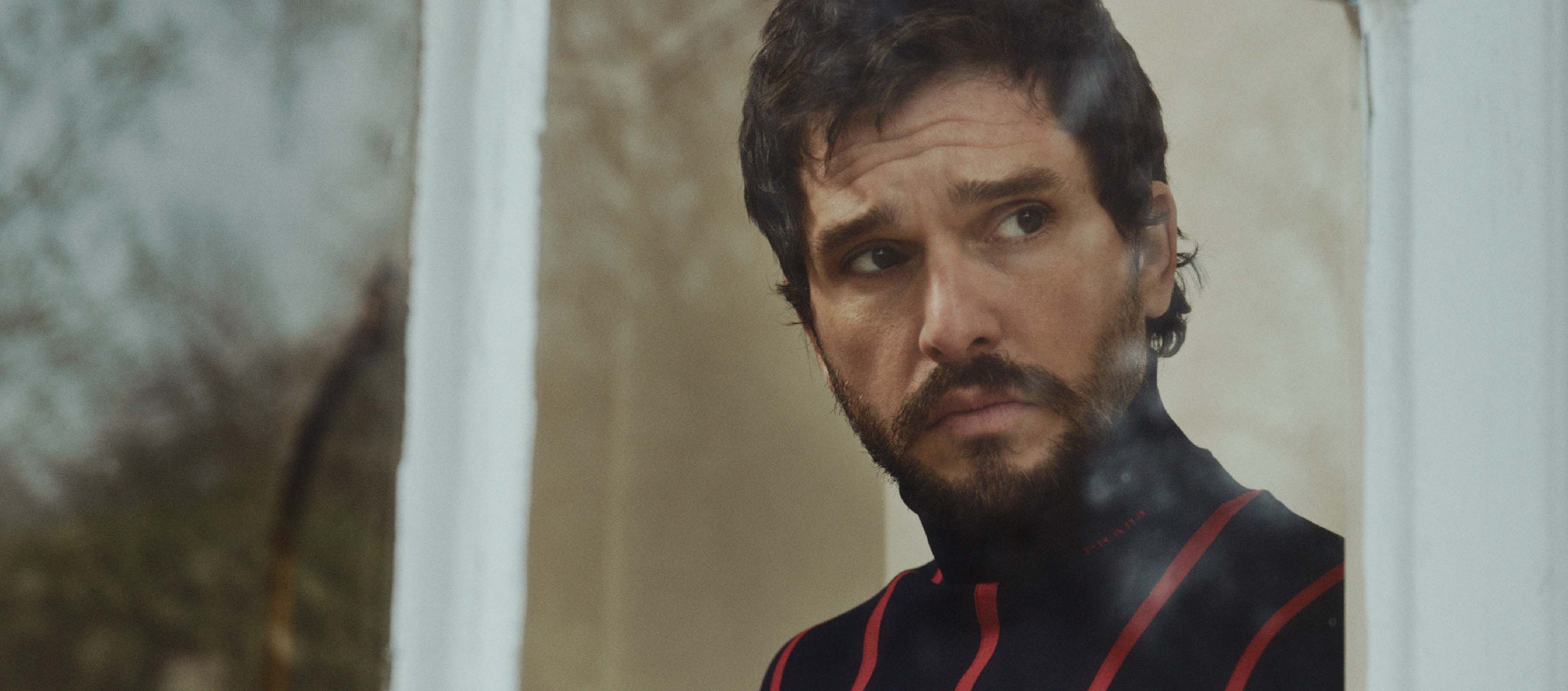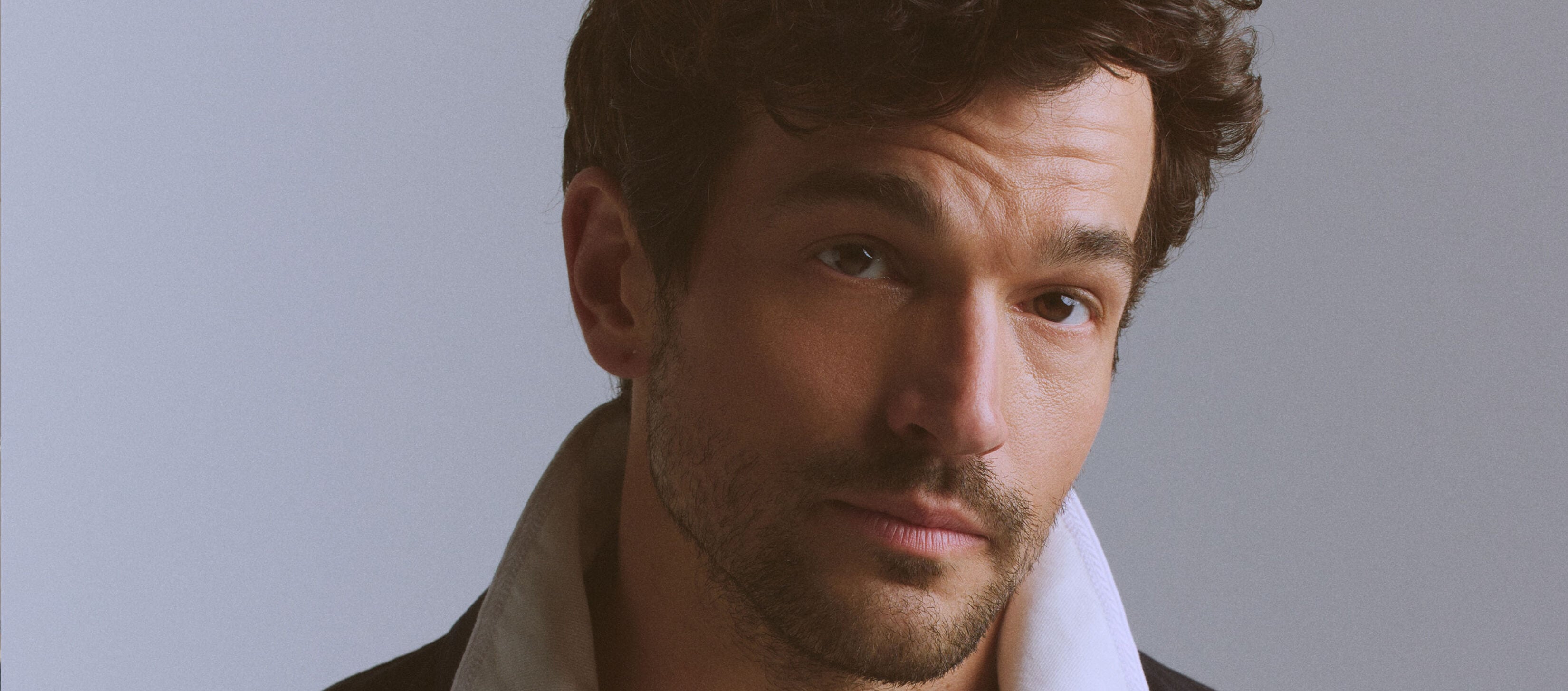


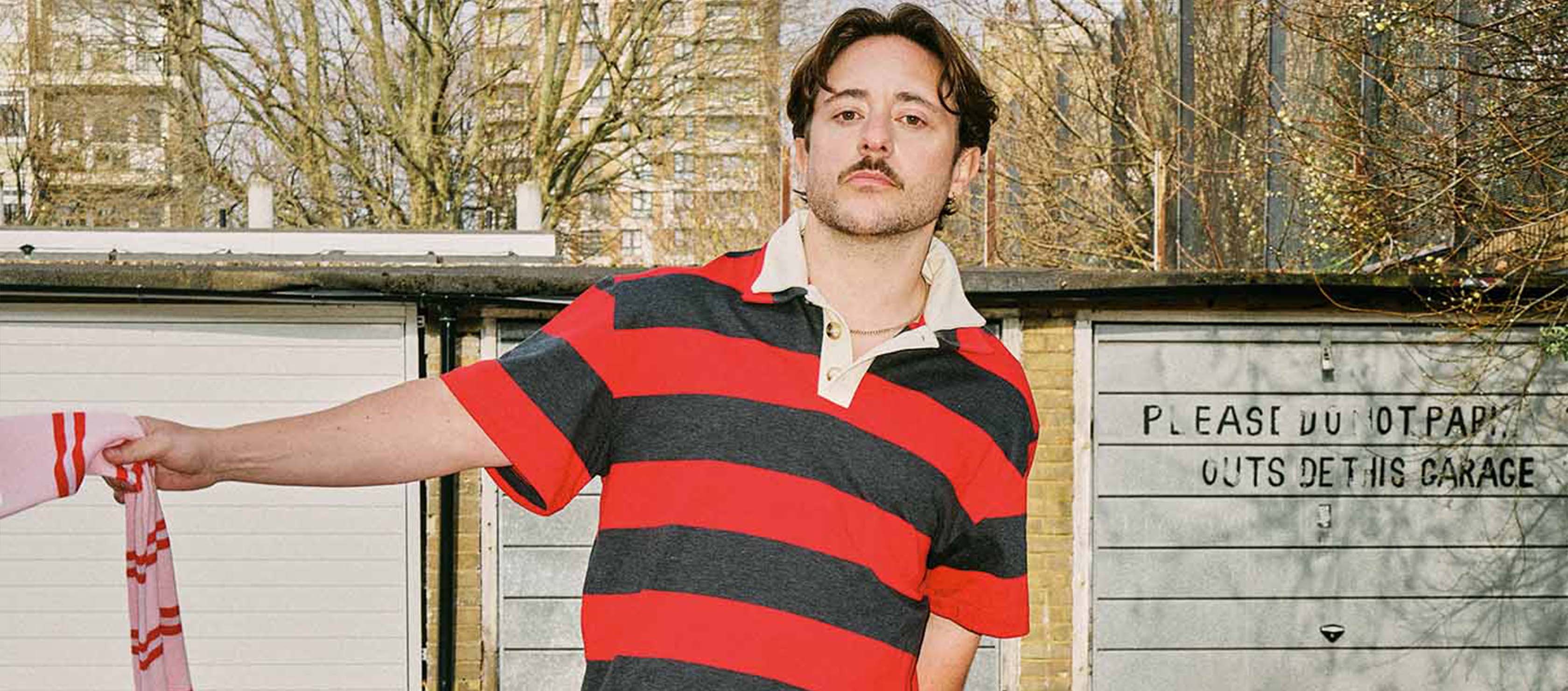
Taking on the role of Mr Collins in the adaptation of Janice Hadlow’s acclaimed novel, the British actor talks his affinity for playing the oddball.
After starring in and writing the BAFTA-winning Sky comedy Mr Bigstuff, Rotherham’s Ryan Sampson steps into the Regency era in charming BBC period drama, The Other Bennet Sister. Playing Mr William Collins is a complex role to take on. The presence of a version of him in Pride and Prejudice means, for one, audiences already feel familiar with him. Then there’s his demeanour – defined by a rich mix of satire and sincerity. However, with Sampson’s expertise in both comedy and drama in tow, it’s a juxtaposition he’s nailed to perfection.
That expertise was acquired most recently through the aforementioned Mr Bigstuff where Sampson leads (alongside co-stars Harriet Webb and Danny Dyer) as a nervy carpet salesman in chaos when his estranged brother re-emerges in his life. The series’ first outing became Sky Max’s biggest new comedy in years and even landed a place on US screens via a Hulu release. You might also know Sampson from Netflix’s The Crown as well as his memorable performances in British comedy classics, Brassic and Plebs. However, with The Other Bennet Sister, playing Mary Bennet’s potential romantic counterpart, he’s helping to introduce a refreshed take on Austen’s highly regarded universe.
In conversation with Man About Town, Sampson tells us about the show, impersonating people in his local village as a child, the resurgence of Plebs and his inability to watch himself on TV.
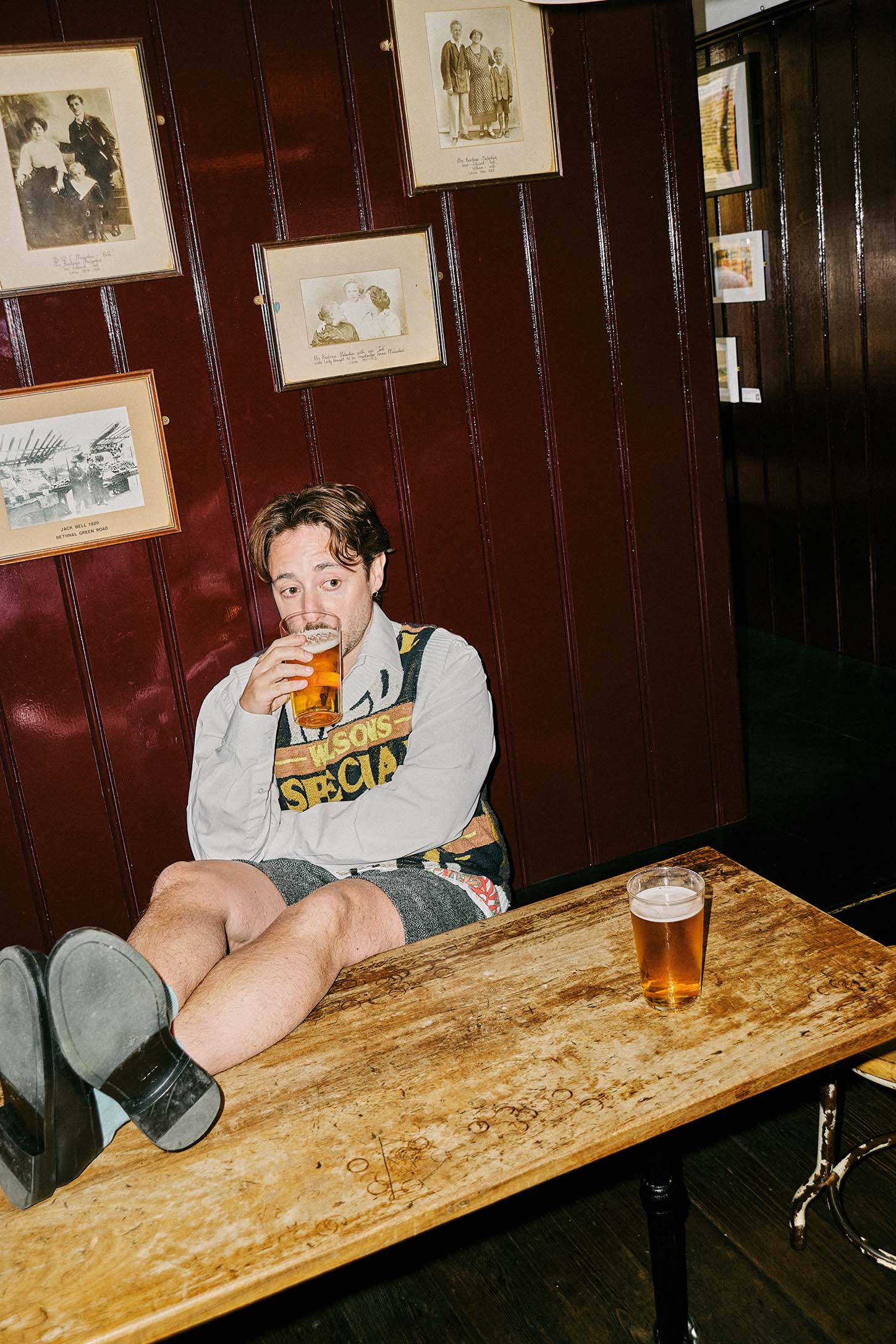
Hey Ryan! The Other Bennet Sister pulls the focus onto someone historically overlooked. What drew you to Mr Collins’s version of the story?
I seem to have developed a speciality for playing oddballs. I’m not quite sure why; it happened by accident. I suppose it’s because I’m drawn to the stranger elements of people, and so I always want to present those in characters: to bring their quirks to light. And so, over time, I’ve carved out this niche without quite really meaning to. Mr Collins is no different.
I think I’ve got this obsession because of where I grew up. It’s a tiny village halfway between Sheffield and nowhere in particular. A little island of bus stops and hedges surrounded by a sea of fields. It’s a small enough place that unusual people can exist there, unchanged. There just aren’t enough people around for you to see that you’re perhaps quite odd.
I didn’t have any friends growing up. Gay was very much not okay there. And so I grew up studying [my neighbours]. The one with the eye twitch, or the woman at the post office who couldn’t make eye contact. The bin men who were definitely stoned at 8am. I used to try to do impressions of them all in the bathroom mirror, until my mum or dad shouted at me to get out of there. I suppose they thought I was wanking, which would actually be slightly preferable to them knowing I was actually obsessively impersonating Cath from the chip shop for hours on end.
[Studying my neighbours] became a habit – working out what made these people act this way. And now, I feel like I’ve become a collector of personalities, watching and categorising idiosyncrasies and tics. With Mr Collins, I had an opportunity to filter some of my findings into another character. He’s full of a really specific strangeness. Not just that, but my favourite combination of traits: the high-ego-low-self-esteem combination. I’ve found that personality imbalances like these are what make for the most interesting characters.
How did you approach making such a well-recognised character feel fresh? Did you lean into expectations of the character or try to subvert it?
I personally live by the idea that if you try to make something to please people – a character, a script, whatever – it’s guaranteed to please no one. I can only try to do what I think is good. And you have to trust that if you’re specific enough with focusing on making something that only appeals to your own tastes, then funnily enough, that’s what ends up hitting the mark with a lot of people. In the specific is the universal – all that jazz. So, yeah, sod the other versions, I didn’t watch them. I’m sure they were really good. But who wants a new version of a beloved character that’s clearly a reaction to that same character in a ’90’s film? I don’t.
As a side note, I thought a lot about how the character traits Austen gave Mr Collins would have been born from observations of people around her 230 years ago. I wonder about those people. Whether a modern eye has sensed a whiff of neurodivergence in them, before that word meant anything. Whether we might even be able to sense a hint of trauma or of a ‘complex’. Therapy logic has permeated so far into our culture now. It’s kind of mad to be playing a character that’s made up of fragments of real people who walked around, in waistcoats and breeches, a few centuries ago.
Having done a wide variety of roles from comedy in Plebs to drama in The Crown, do you feel like those experiences inform each other?
Yeah, for sure. You learn different tricks and techniques with every genre that you perform, and every TV show has its own bit of education for you. Plebs had a super high page count per shoot day, so we had to be like a little army unit, completely prepared before we got to set every day at 6 am, with a clear idea of how we would perform each punchline or physical gag. It meant a lot of homework every night. Brassic was massively improvised, so you needed to be ready to inhabit the character to the degree that you could riff on their backstory at the drop of a hat. On the other side of things, the dramas I’ve done have taught me about effortlessness; when a camera is right up in your face, you need to be able to deliver lines with total ease. Effort, even the slightest amount, can ring really false on screen. It is easier said than done when you’re reciting seven pages of script, trying to hit a load of marks, and you’ve got 30 crew members in front of you who all just really want to go to lunch.
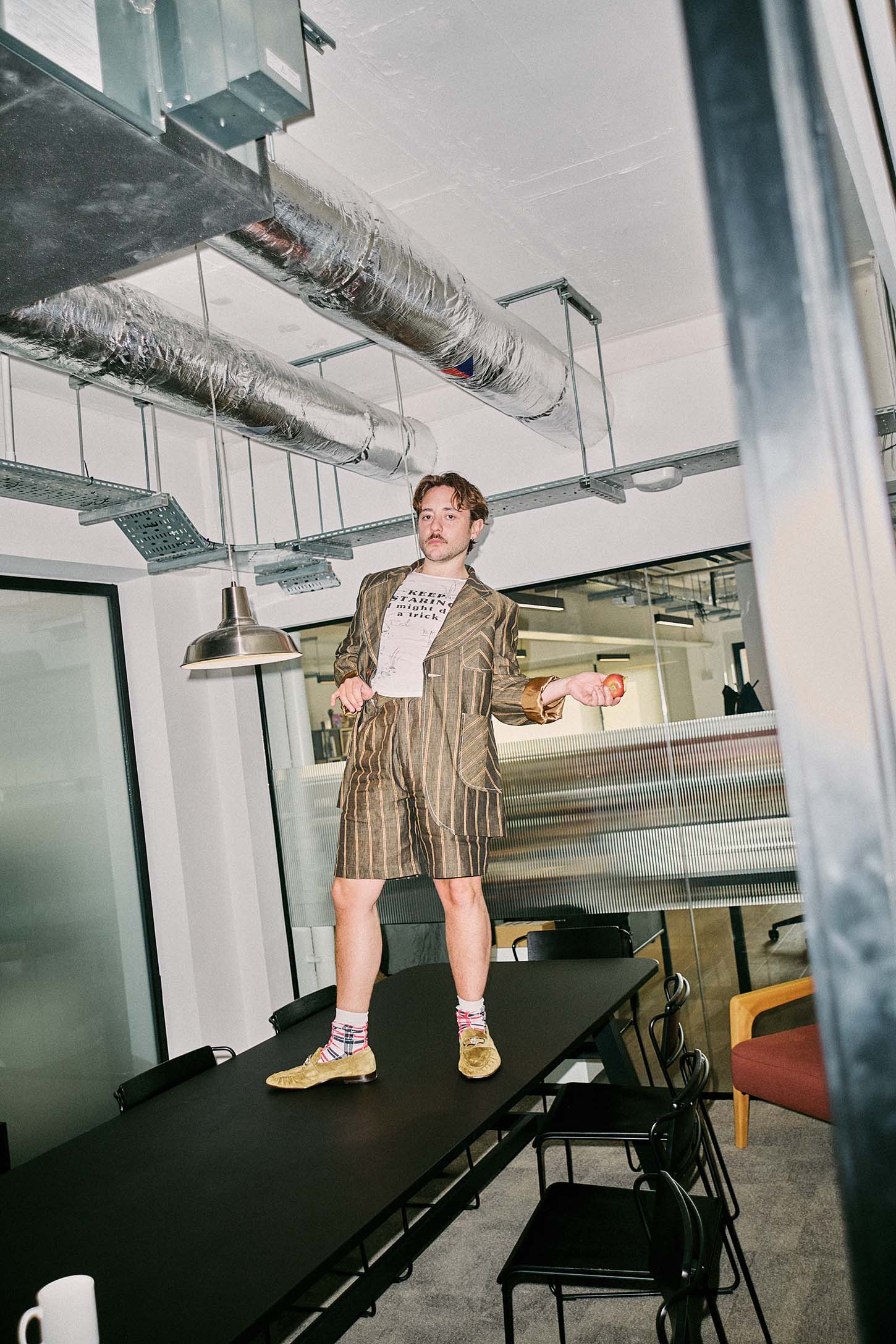
Plebs is experiencing a new lease of life with audiences via Netflix. What is it like for people to keep discovering your work years down the line?
It’s honestly very weird. This is happening currently with both Plebs and Brassic; they’ve been out for years on other channels, but then they’re put on Netflix and suddenly everyone is coming up to me telling me how much they like these new shows. I can only imagine they think I filmed them last year but that I’ve just aged really rapidly since then. That’s actually one of the downsides of doing these long-running series (Plebs was five series, Brassic was seven); you can see all the seasons piled up against each other and it’s like you’re ageing in fast forward. The slow descent of your flesh as it slides down your skull, it’s fucking terrifying.
To be honest, being on TV has given me a fair bit of a complex about how I look. I had to walk out of the room when my partner turned on The Other Bennet Sister – I came on screen and I just saw: a new potato in a wig. I look like someone dressed as a gnocchi. As a result, I can’t really stand to watch anything that I’ve filmed. Ah well.
Having created and starred in Mr Bigstuff, how has doing both changed the way you think about performance?
It’s not changed the way I think about performance massively, other than the fact that it’s made me less precious about it, having seen the extent to which you can make or break a performance in the edit. That bit has actually been a revelation. Being in the edit for a TV show that I’ve written is a singular experience. Because you’ve pored over these stupid little words hundreds of times for months and months, turning over all the different iterations in your mind, you have an absolute blueprint in your head of the ideal way it should play out on screen. And so having the editor next to you, being able to carve away at takes, shaving a few frames off here, adding more of a pause there, you suddenly have the ability to make the thing exactly what you want it to be. For a megalomanic little man like myself, it really does work wonders.
With the global success of Mr Bigstuff, how do you feel like your writing will change when trying to appeal to a more international audience?
I seriously hope not. As I said, you can only write to your own tastes. Also, I think foreign audiences love it when a show is so specific to the place it’s from. Brassic, surprisingly, has become huge in Russia. Apparently, people there really identify with those working-class archetypes with these chaotic lives.
At one point, at the beginning of the Russia-Ukraine war, Russia stopped having the right to dub shows into its own language. Cue me, and the rest of the Brassic cast, getting literally thousands of messages from Russians asking us to reverse this decision. It was so strange. They were ordinary people who didn’t want anything to do with a war, and who were just livid that they couldn’t enjoy their favourite TV shows.
Is there a genre you’d like to try your hand in with your next role?
Yeah, I’m writing a horror/thriller TV series. I love good horror; the type with a psychological edge. I feel like we’re on the cusp of this resurgence of great horror/thrillers. Films like Weapons, Bugonia and Hereditary are pushing that envelope a bit. Although I don’t understand why there are so few great, properly terrifying TV series being made. Maybe it’s because of conservatism of commissioners, wanting broader-appeal shows? Unsure. I’ll find out and make sure to report back. In terms of acting roles, I think I’ll keep on with the oddballs and the weirdos. God knows I enjoy it.
The Other Bennet Sister is available to watch now on BBC iPlayer (UK) and on Britbox from May 6th (US & Canada)
Photography by
Joshua Tarn
![Picture of “[After Boots, People Said:] ‘You’re So Nice, I Can’t Believe That You Play Such A Freaky Sociopath’”: Angus O’Brien Is Marching On](/_next/image?url=https%3A%2F%2Fadmin.manabouttown.tv%2Fwp-content%2Fuploads%2F2026%2F05%2FANGUS-OBRIEN-hero-image-768x341.jpg&w=3840&q=85&dpl=dpl_s7wFmvZo5YcTNCjx5sb4PUUzKfcj)
![Picture of “Anyone Who Knows Me Or Knew Me When I Was Younger Would Be Laughing At The Idea [Of Me Being A Fashion Campaign Face]”: Corey Mylchreest On Becoming A Fully-Fledged Leading Man](/_next/image?url=https%3A%2F%2Fadmin.manabouttown.tv%2Fwp-content%2Fuploads%2F2026%2F04%2Fg.jpg&w=3840&q=85&dpl=dpl_s7wFmvZo5YcTNCjx5sb4PUUzKfcj)