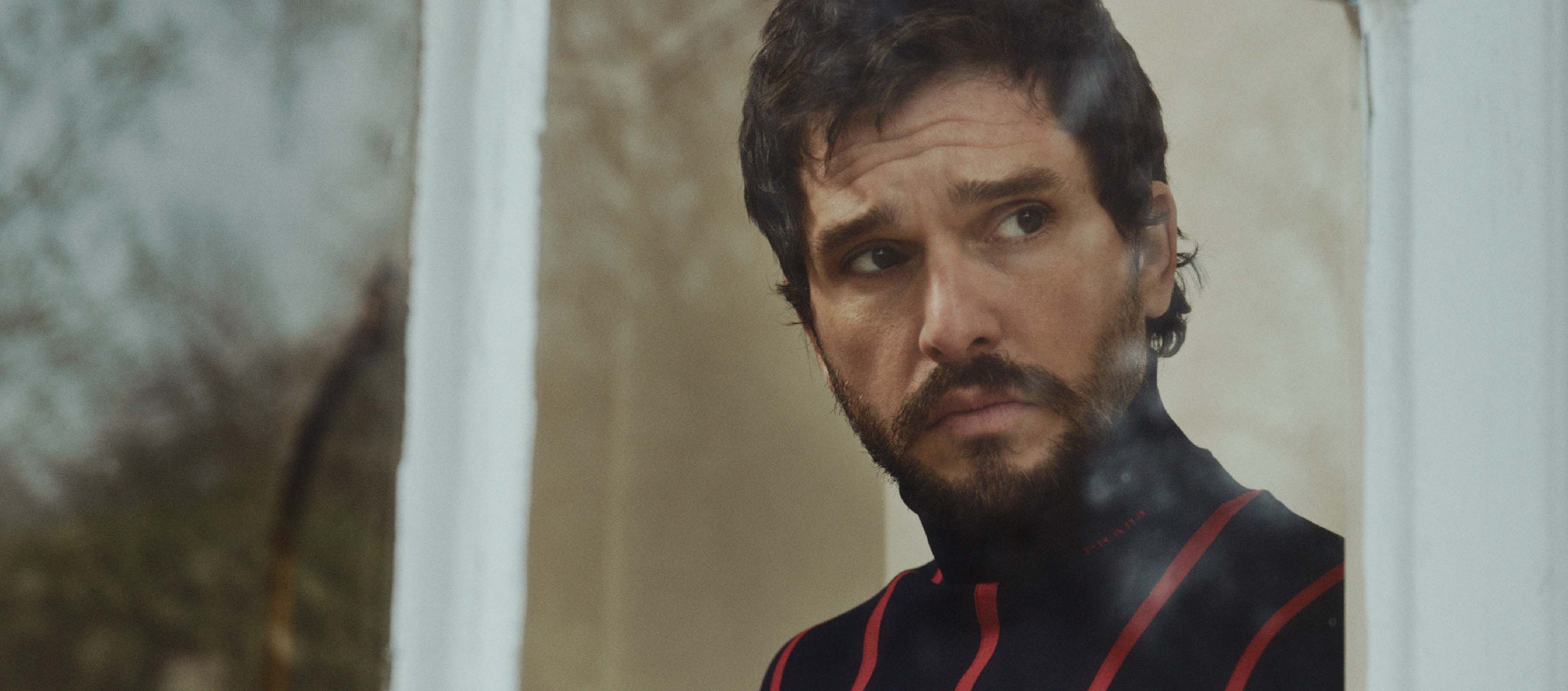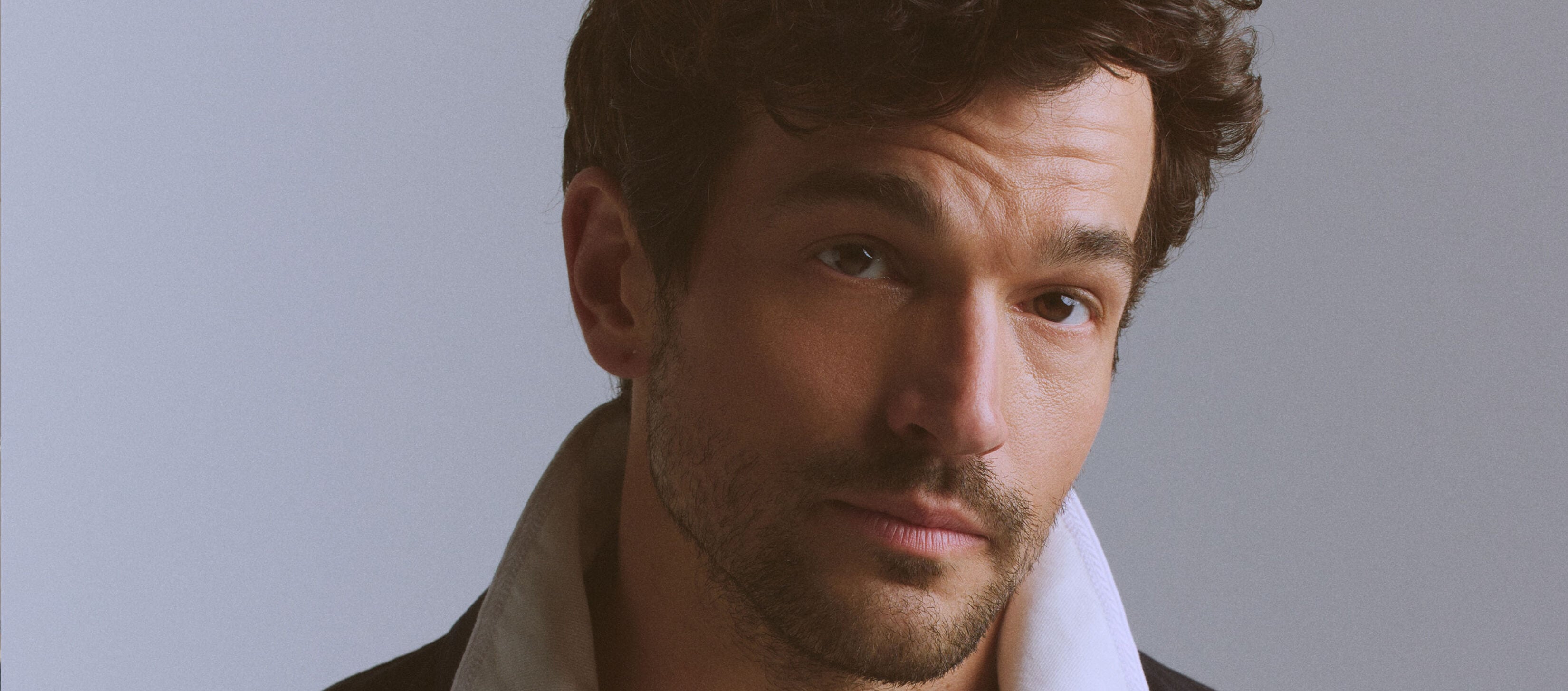


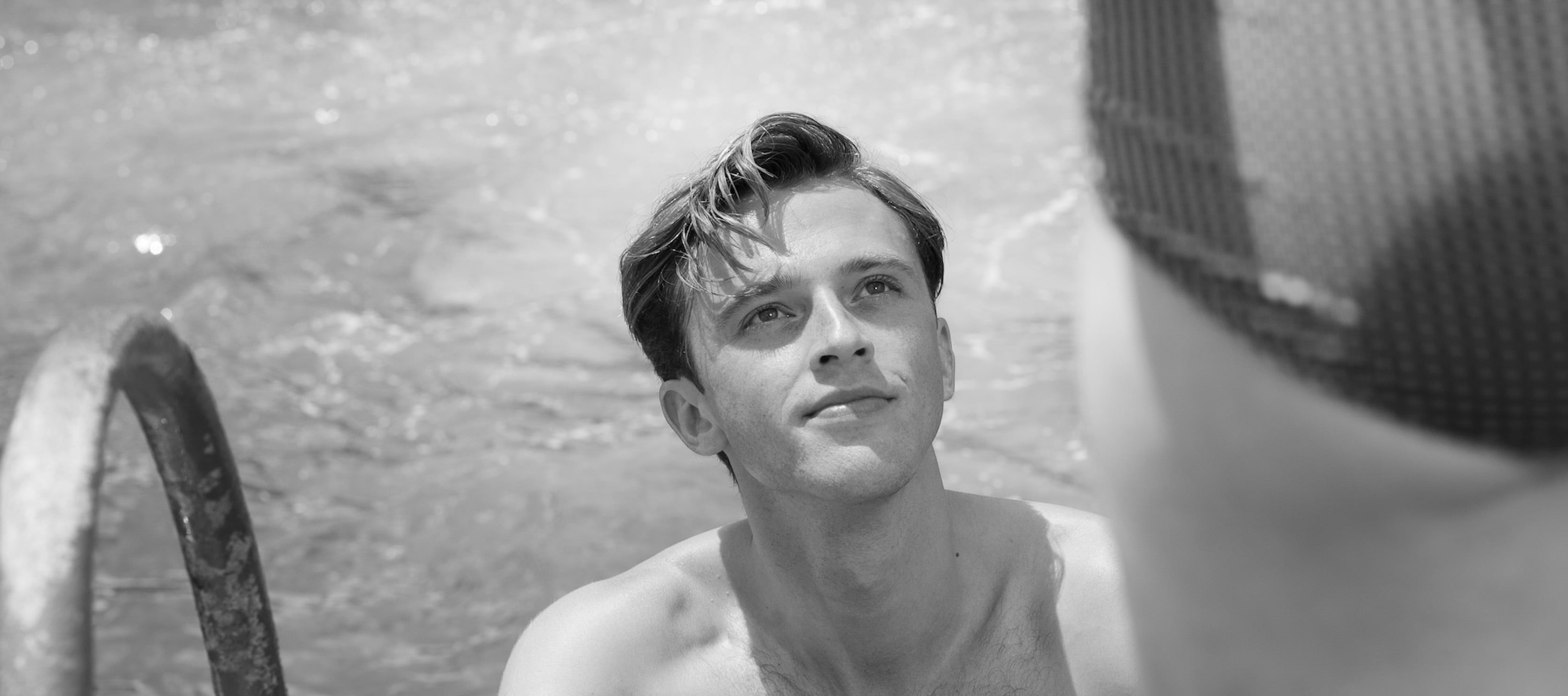
Taking centre stage as Meursault in the cinematic adaptation of Albert Camus’s 1942 novel, the French actor talks the tailor-made role, his friendship with director François Ozon and his big plans for 2026.
Playing the role of someone who’s defined by their lack of emotions comes with its own set of challenges. On top of that, for Benjamin Voisin in The Stranger, there’s the pressure of simply doing justice to a piece of legendary French literature. Leading as highly-debated protagonist Meursault, in François Ozon’s take on the 1942 Albert Camus novella, a certain level of restraint is required. It’s a part that demands nuance, ambiguity and a sense of moral distance through insensitivity. Voisin isn’t your stereotypical antihero, but his performance really stays with you. Not just because of his atypical qualities, but because his character is strangely real.
The role sees the César-nominated actor step into a new kind of character, following his breakout in 2020’s Summer of 85 (where he also worked with Ozon) and his award-winning performance in 2021 period drama Lost Illusions. Voisin is now the centrepiece of another of Ozon’s visions, playing a character that brings with his cultural weight, myriad complex themes including human cruelty, existentialism and post-colonialism. They’re big shoes to fill but, thankfully, Voisin’s never been more ready.
In conversation with Man About Town, he speaks on his reunion with Ozon, how he tapped into his role as Meursault and finding an unexpected best friend.
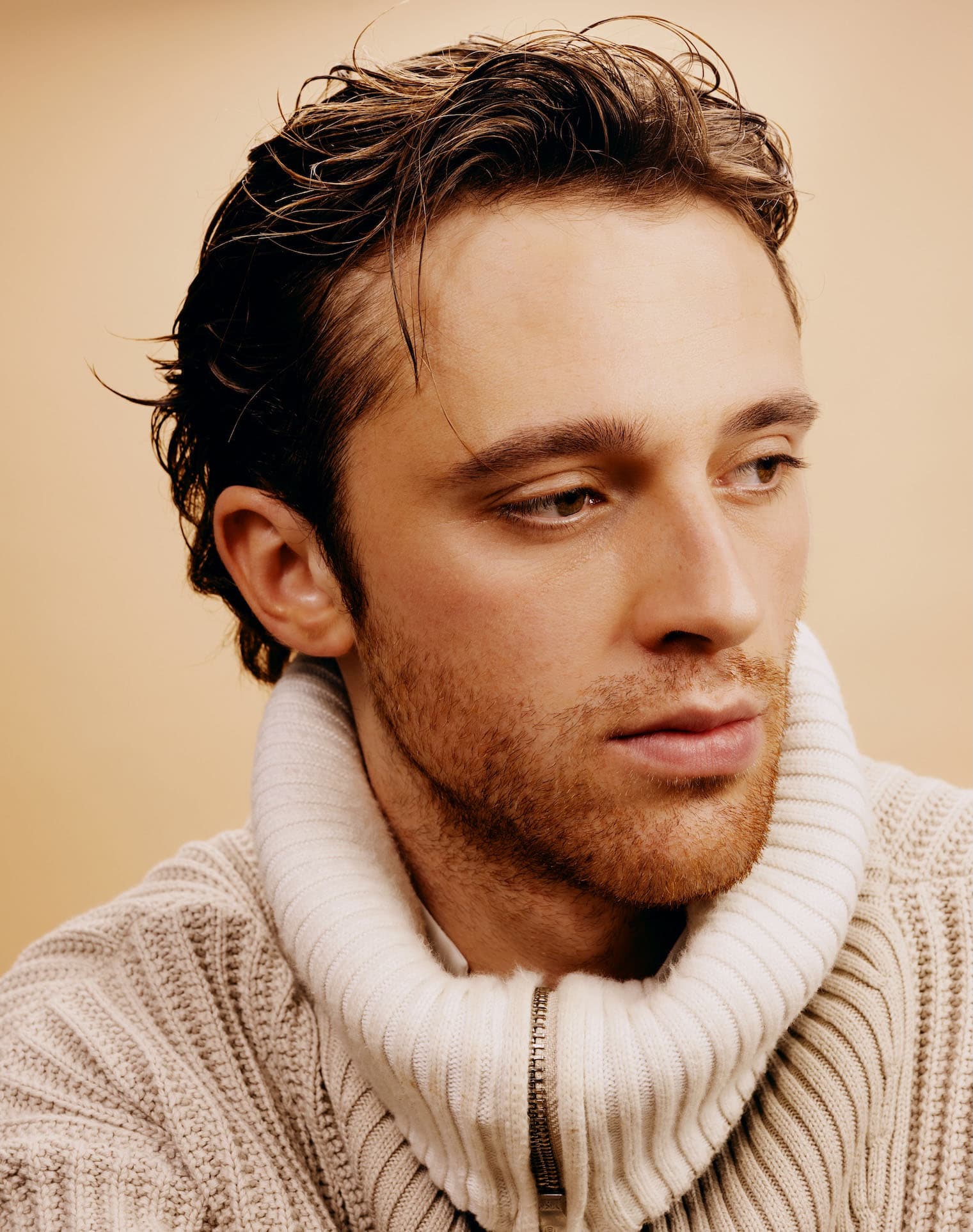
(c) Marie Rouge / Unifrance
Hi Benjamin! Congratulations on The Stranger! You previously worked with François Ozon on Summer of 85. How did it feel reuniting with him for this?
It was wonderful because I was very young when I acted in Summer of 85 and François almost gave me a hand and gave me this amazing opportunity – and then I’ve done quite a few films since. The questions I asked myself on Summer of 85 were much more naive, much simpler.
For instance: “Do I act well?” Whereas when it came to The Stranger, I was asking myself, “Does my work fit with the aim of the film, the aesthetics and the idea of the film?” And so that’s a much more interesting question, a much more complex question. But, of course, I also owe this change and this greater maturity to the other directors I’ve worked with in the lead-up to The Stranger.
What drew you to the film when you read the script for the first time?
The first film, and starting with something new. When I read it, I thought it was great. I told Ozon, “If you’re up for it, I’m sure I’m going to love spending three or four months sitting with Albert Camus’ work and wondering why this man is foreign to the world, why he is foreign to himself.”
What does it mean to accept social codes? What does it mean to refuse them? These are all the questions that I find magnificent in The Stranger, but also in the philosophy of Albert Camus, which I find quite essential in a universal way. But perhaps even more so in the contemporary world, where we can lack, in my opinion, humanity in some places. We gain it in some places, but unfortunately, in others we lose it.
I should also add that François and I are friends in our daily lives. We see each other, we’re constantly talking, and I was meant to act this role. And then we both started doing some research and reading various materials that we thought could be inspiring.
At that point, François read The Stranger by Camus, constantly talking about all these references, inspirations and ideas. It seemed like the perfect project and, in one week, François wrote a very rough first draft. I don’t think it was a proper script, but more like a set of the major sequences of the film – an outline. He asked me, “What do you think? Are you interested in this?” And I said, “Well, if you are, of course, I’d be delighted to spend three or four months in the company of Camus and asking myself all these questions”, which I think are more and more important in the world we live in.
Meursault seems like an extremely calm and mysterious character. What were some of the pleasures and difficulties of tapping into his psyche?
I think the biggest challenge was the experience of the great philosophers and great authors. There’s an author called Schopenhauer, there’s an author called Nietzsche, there are lots of different writers, and I said to myself, “For once, I’m not going to be on the screenplay, I’m not going to learn the text, I’m not going to spend hours trying to figure out how to play it.”
The idea was mainly to find the spiritual form of the character and try to summon it so that it is as close to me as possible. And then, if he has to cry, if he has to laugh, if he has to dance, if he has to run, it will be done by himself, because I would have already found the body of “the stranger”.
So, my aim was not to go out towards the character, but rather to let the character come towards me. I felt that this time around, the only worthwhile way to work and to experience it was to pass through the work and interrogations of great philosophers such as Arthur Schopenhauer and Nietzsche. I did not spend hours poring over the script, reading and rereading it and learning all the dialogues and wondering, “How should I play this?” “How should I play that?” But I decided that what mattered the most was to find the spiritual form, the spiritual shape or life of the character. Also, the physicality and any other reactions that were required – for instance, if Marcel was to laugh, to cry, to run, to dance, those would have come by themselves.
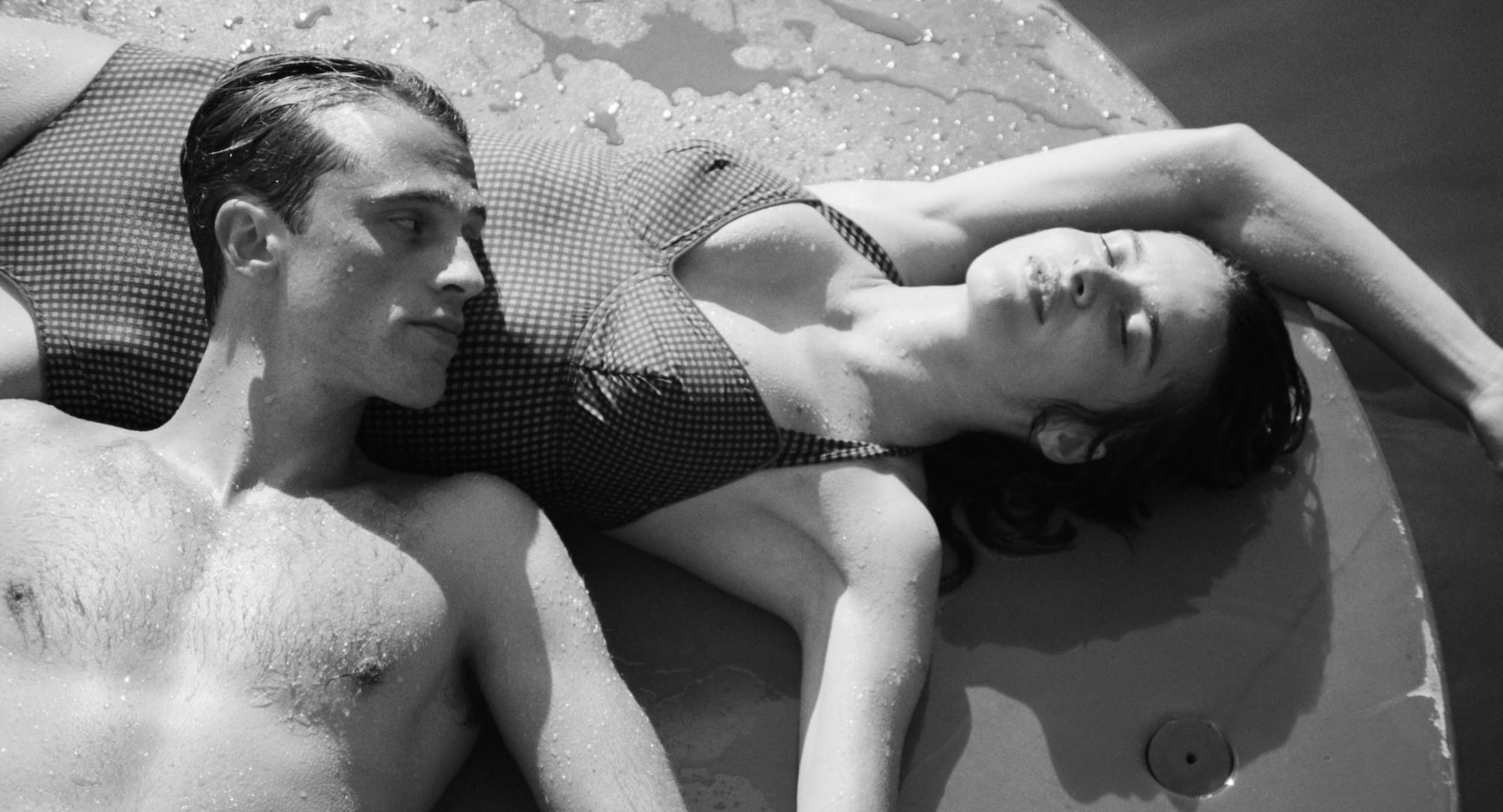
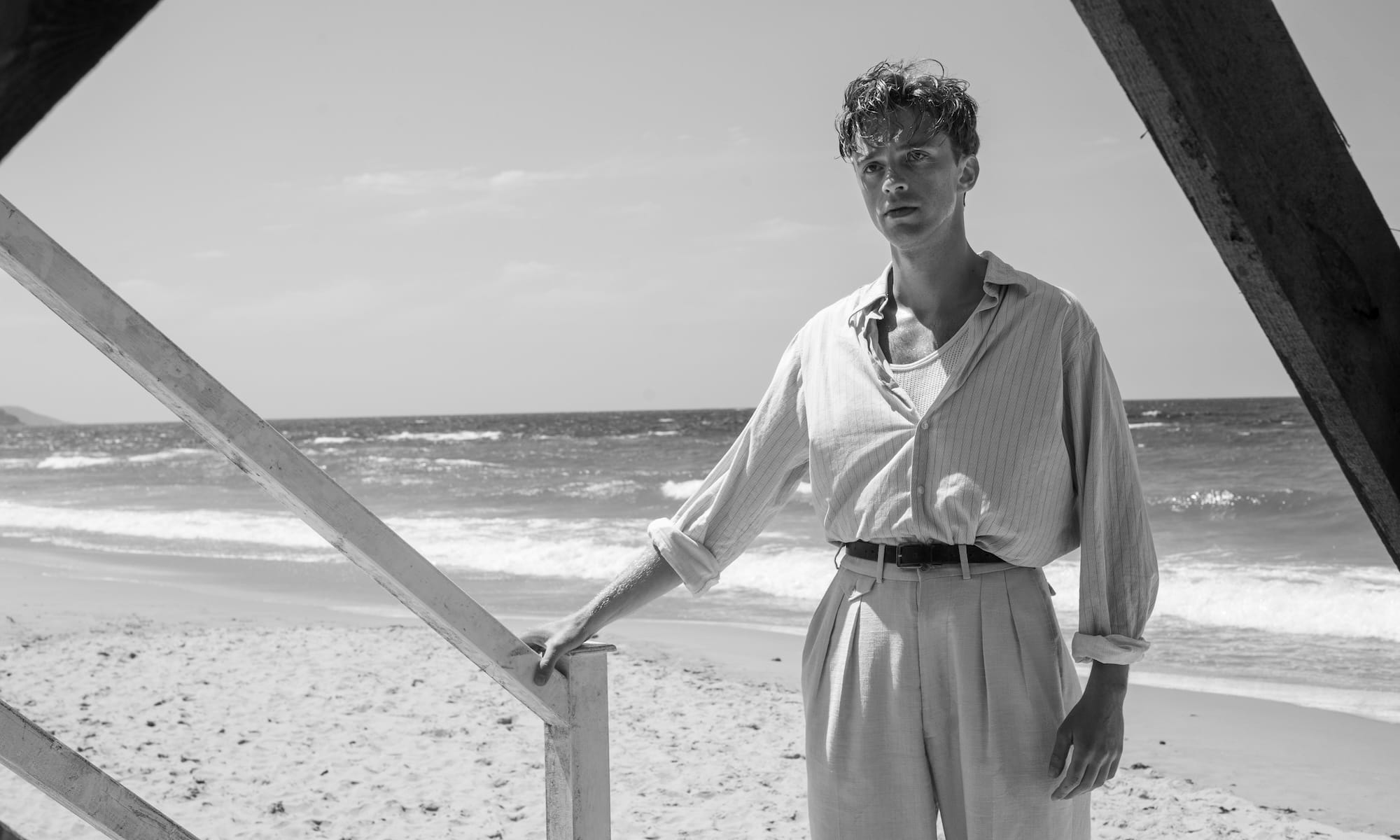
You’re also playing Marie-Antoine Carême in the TV series Carême. How was it transitioning from being a world-renowned chef to the role of Meursault?
[Marie-Antoine] was this young man who was completely crazy about himself. Opportunistic, who invented French gastronomy, who invented so many things that make up France’s culinary culture. On the other hand, to go to Morocco [for The Stranger] and devote yourself to an almost monastic life, calm, peaceful – that’s what I prefer. What I like the most about my job is trying to understand people’s intimacy, getting closer to them and trying to depict them with as much poetry and truth as possible so that people who feel concerned can find themselves. It’s both selfish and, I hope, generous. If I had to do the same thing every time, it would bore me a lot.
Who were you most excited to work alongside for The Stranger? Why?
As an actor or generally, it would be working with François again. Now he’s a friend and I’ve been very excited to work with him again and take a bigger step than we did before. So yeah, I would say François Ozon, because I love his movies, and I’m very proud to put my face on one of them.
If you had to live the life of any of your past roles, which one would you pick and why?
There was a beautiful first movie, A Vrai Bonhomme (Man Up!). This is the story of a big brother who died too young. He continued to live in the memory of the youngest brother – like a ghost. When I was acting in this movie, I was like a movie actor, but also a theatre, drama, play, stage actor, because as a ghost, you can do anything you want. You don’t have to be near reality. You can be a little bit more extroverted than an actor who has to be natural. That was strange to be already dead, but to be fucking alive, probably more alive than a lot of people.
What’s on your vision board, career-wise, for 2026?
I have a big show to do. A big movie to do as well. It takes all my time, but [otherwise] being with my guitar alone on my own – it’s my best friend right now. [The film I’m doing] is going to be a huge movie. We’re shooting in two or three months. I can’t say anything else because it hasn’t been announced yet.
The Stranger is in UK & Irish cinemas 10th April
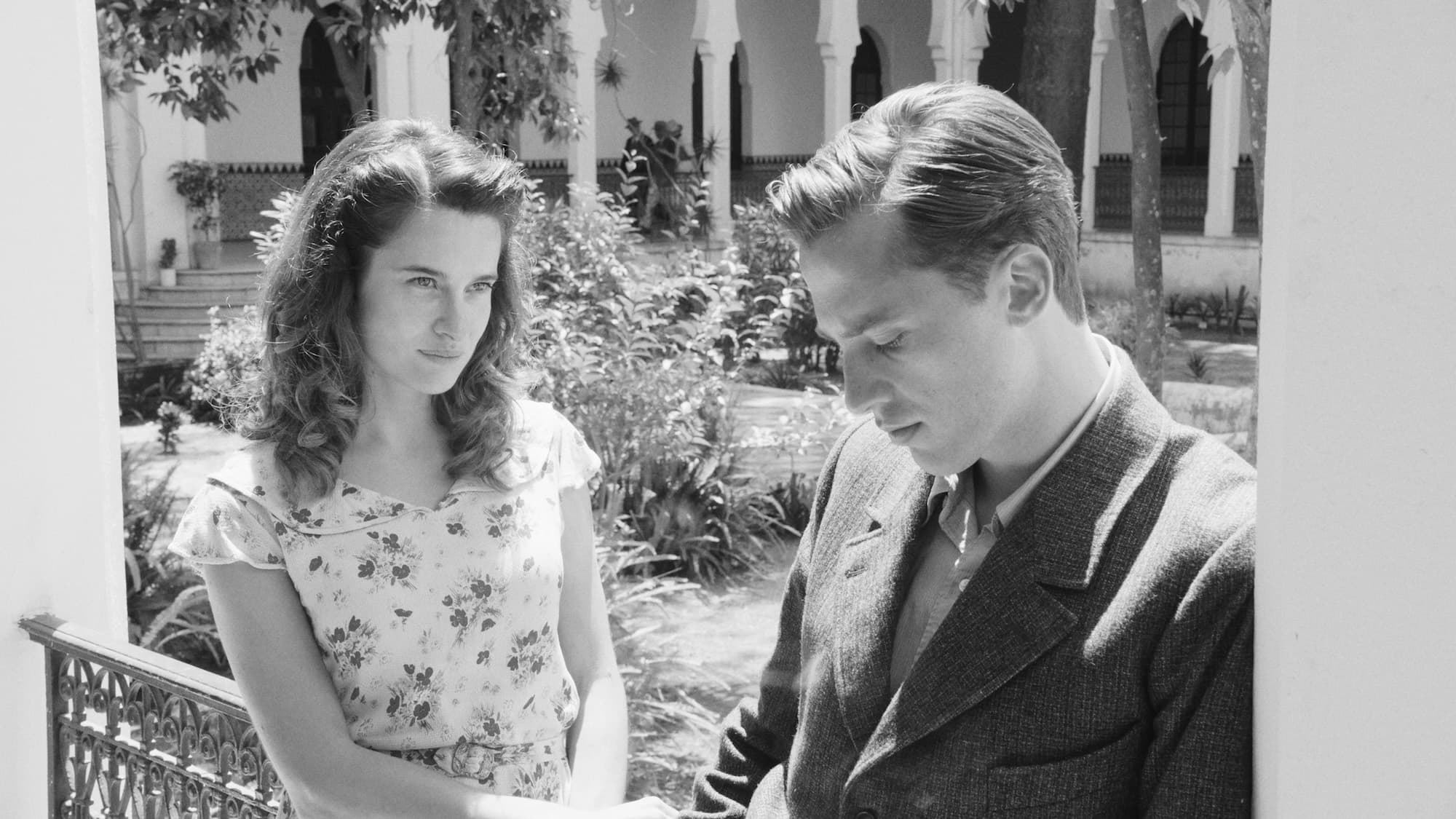
Photo Carole Bethuel (c) Foz - Gaumont - France 2 Cinema.
![Picture of “[After Boots, People Said:] ‘You’re So Nice, I Can’t Believe That You Play Such A Freaky Sociopath’”: Angus O’Brien Is Marching On](/_next/image?url=https%3A%2F%2Fadmin.manabouttown.tv%2Fwp-content%2Fuploads%2F2026%2F05%2FANGUS-OBRIEN-hero-image-768x341.jpg&w=3840&q=85&dpl=dpl_s7wFmvZo5YcTNCjx5sb4PUUzKfcj)
![Picture of “Anyone Who Knows Me Or Knew Me When I Was Younger Would Be Laughing At The Idea [Of Me Being A Fashion Campaign Face]”: Corey Mylchreest On Becoming A Fully-Fledged Leading Man](/_next/image?url=https%3A%2F%2Fadmin.manabouttown.tv%2Fwp-content%2Fuploads%2F2026%2F04%2Fg.jpg&w=3840&q=85&dpl=dpl_s7wFmvZo5YcTNCjx5sb4PUUzKfcj)