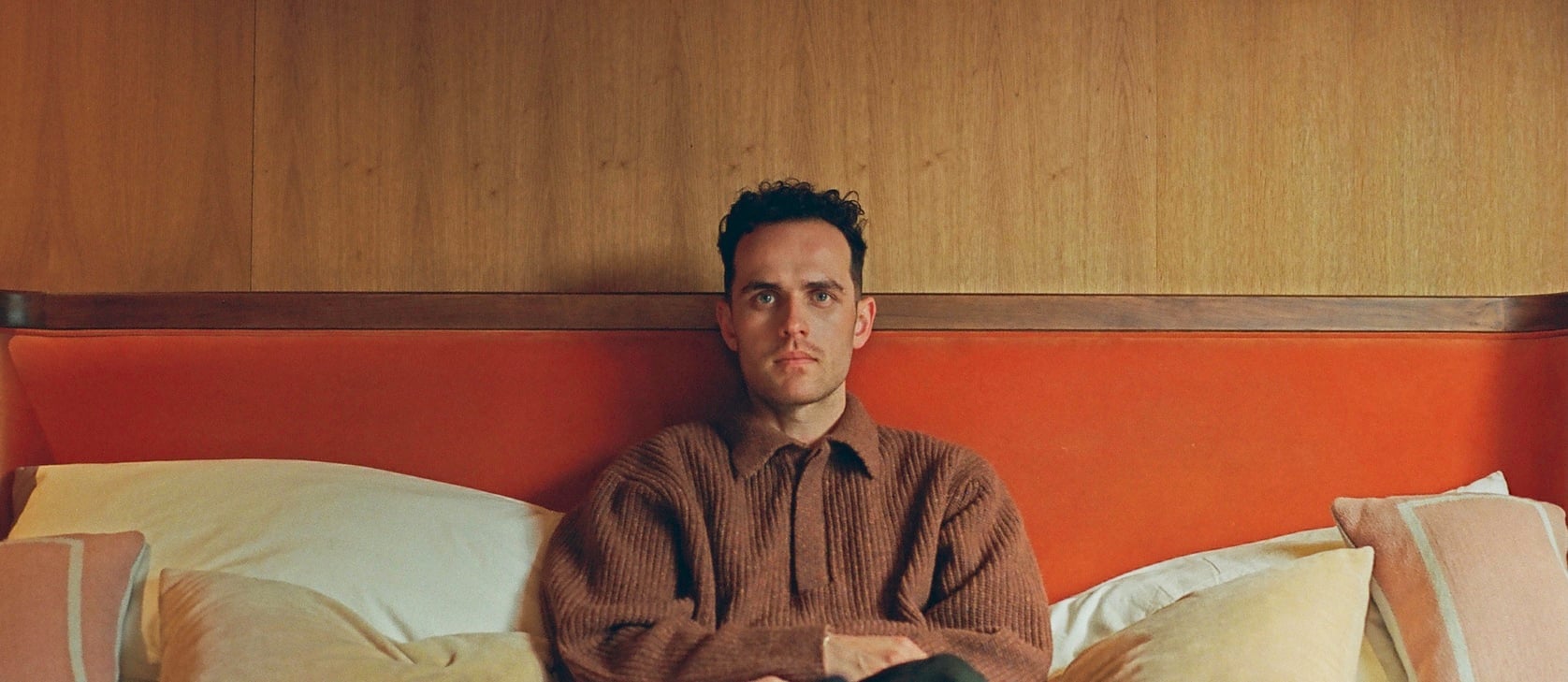


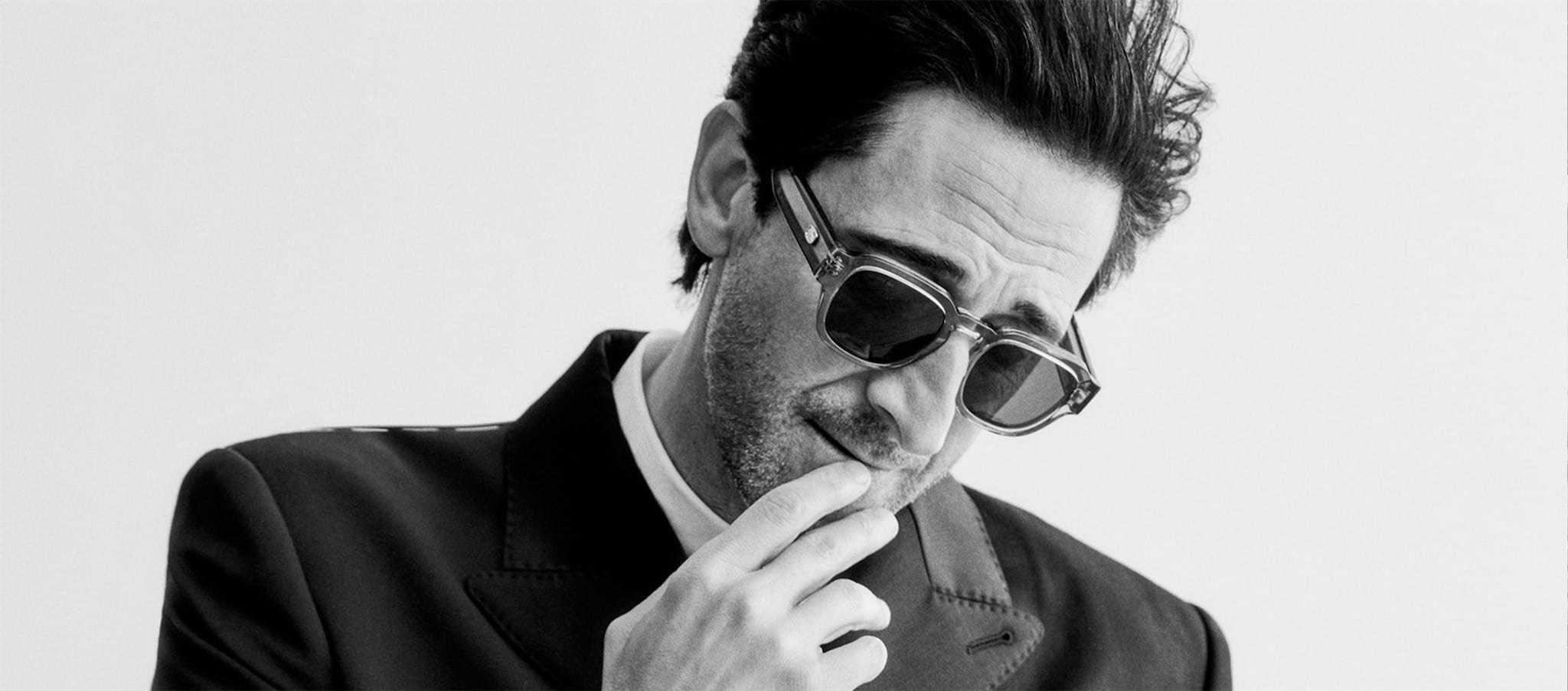
Over two decades on from winning acting’s highest honour, Adrien Brody returned to the acme of his craft with his second Oscar for The Brutalist. The next milestone in his sights? His Broadway debut.
He is a two-time Oscar-winning dignitary of contemporary Hollywood. An actor of uncompromising yearning and depth. A man of skill, suaveness and sophistication. An artistic force driven by the pursuit of fresh challenges. Not to mention an exhibited painter. And yet Adrien Brody is very much human – and very much accustomed to misplacing his glasses.
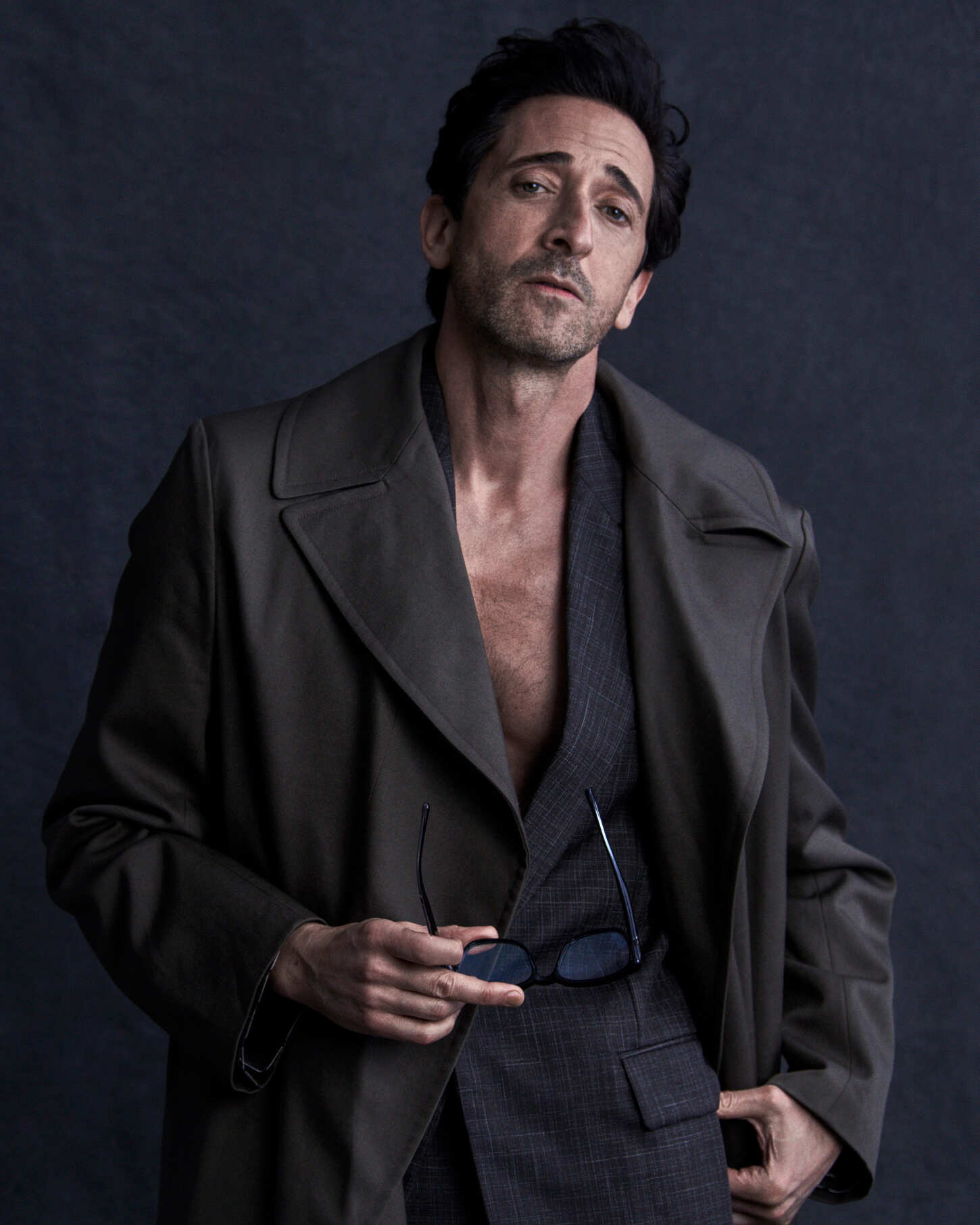
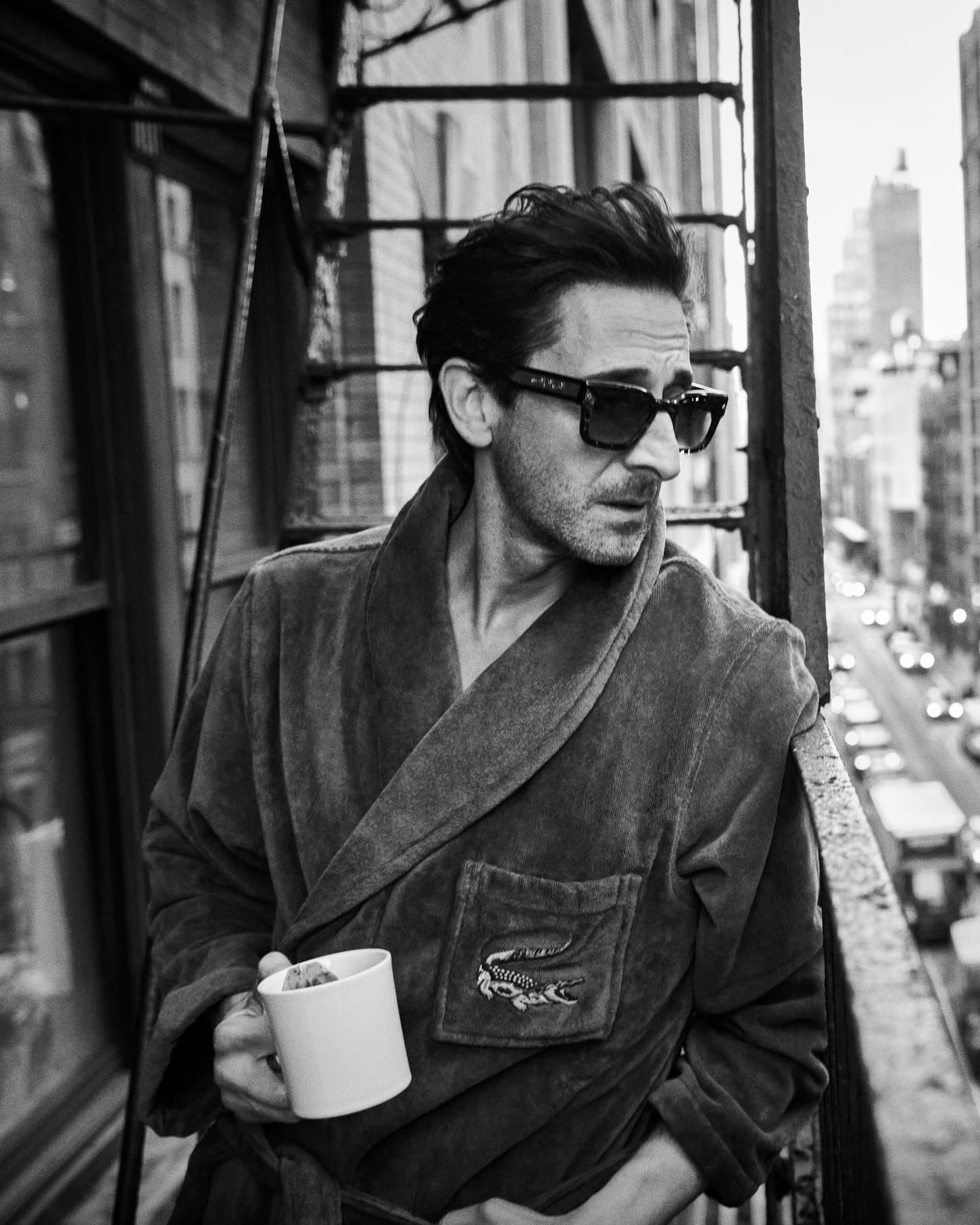
In that, he and I are similar. For me, that usually means a period of relative blindness and existential panic at my struggle to conduct menial tasks. For him, it’s less of a bother. Eyewear is not something Brody is short of – especially of late. In January this year, it was announced that the 52-year-old had been appointed the Global Eyewear Ambassador of Lacoste. The brand, founded in Troyes, France in 1933 by tennis legend René Lacoste and entrepreneur André Gillier, famed for its luxury sportswear, accessories and iconic crocodile logo, has held Brody in high regard for quite some time. It’s a relationship that strikes back some 14 years, when Brody and Lacoste collaborated on the Unconventional Chic campaign. The actor has been a staunch ally since, often appearing at Lacoste’s fashion shows, and this eyewear endeavour affirms the symbiosis between the two icons of style.
“We’re old friends,” Brody says with a warming nonchalance, dialling in from across the Atlantic, amid January’s chill, for his Man About Town cover interview. “We represent one another. I choose to align with a brand that I feel aligns with me in many ways. Fortunately, they make sunglasses and glasses – eyewear that looks great, fits me well, and that I’m very comfortable in. I admire the work of Pelagia [Kolotouros, the Creative Director], and I identify with the brand and their ethos. They’ve been good to me, and I really value the relationship.”
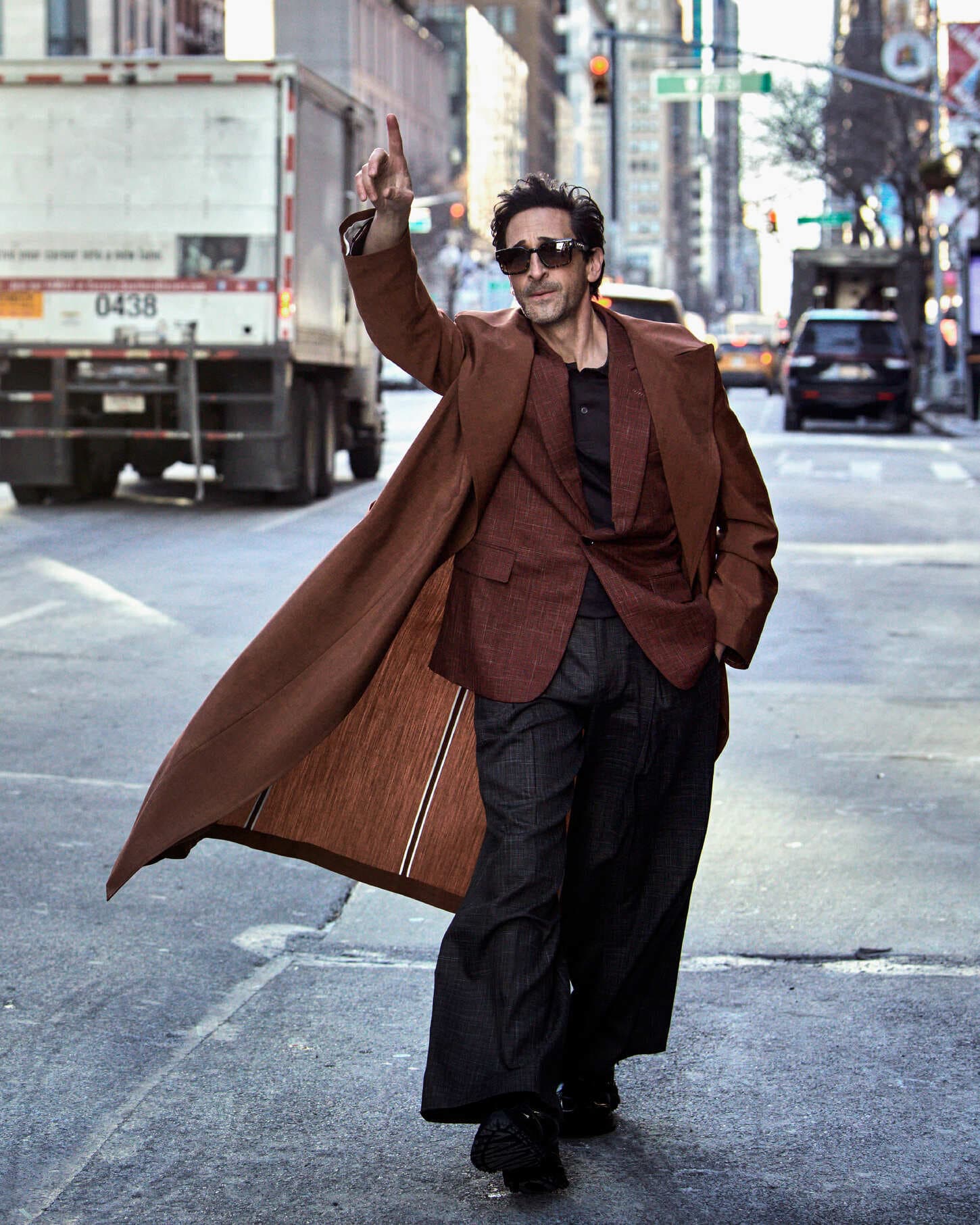
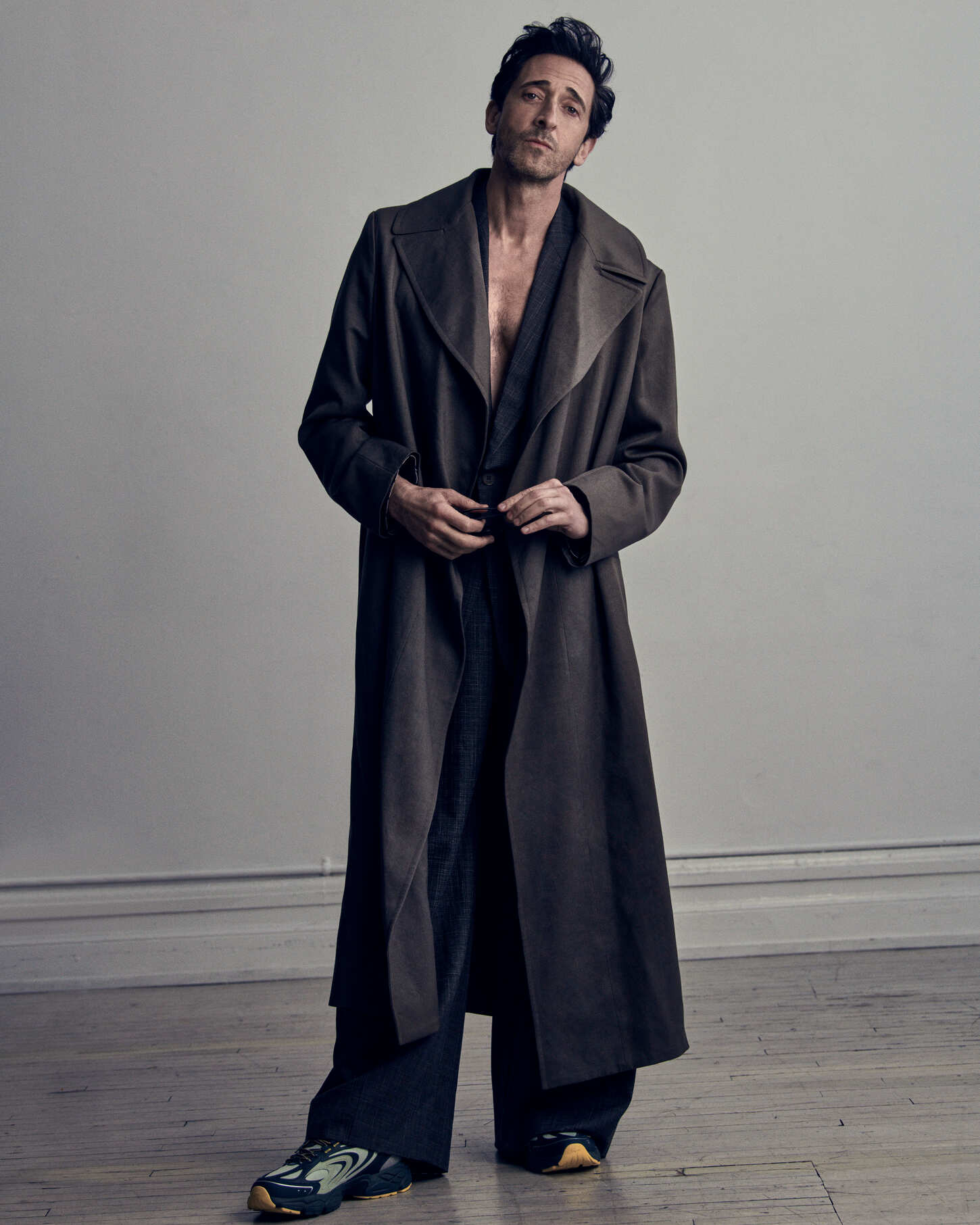
Adrien wears full look by LACOSTE
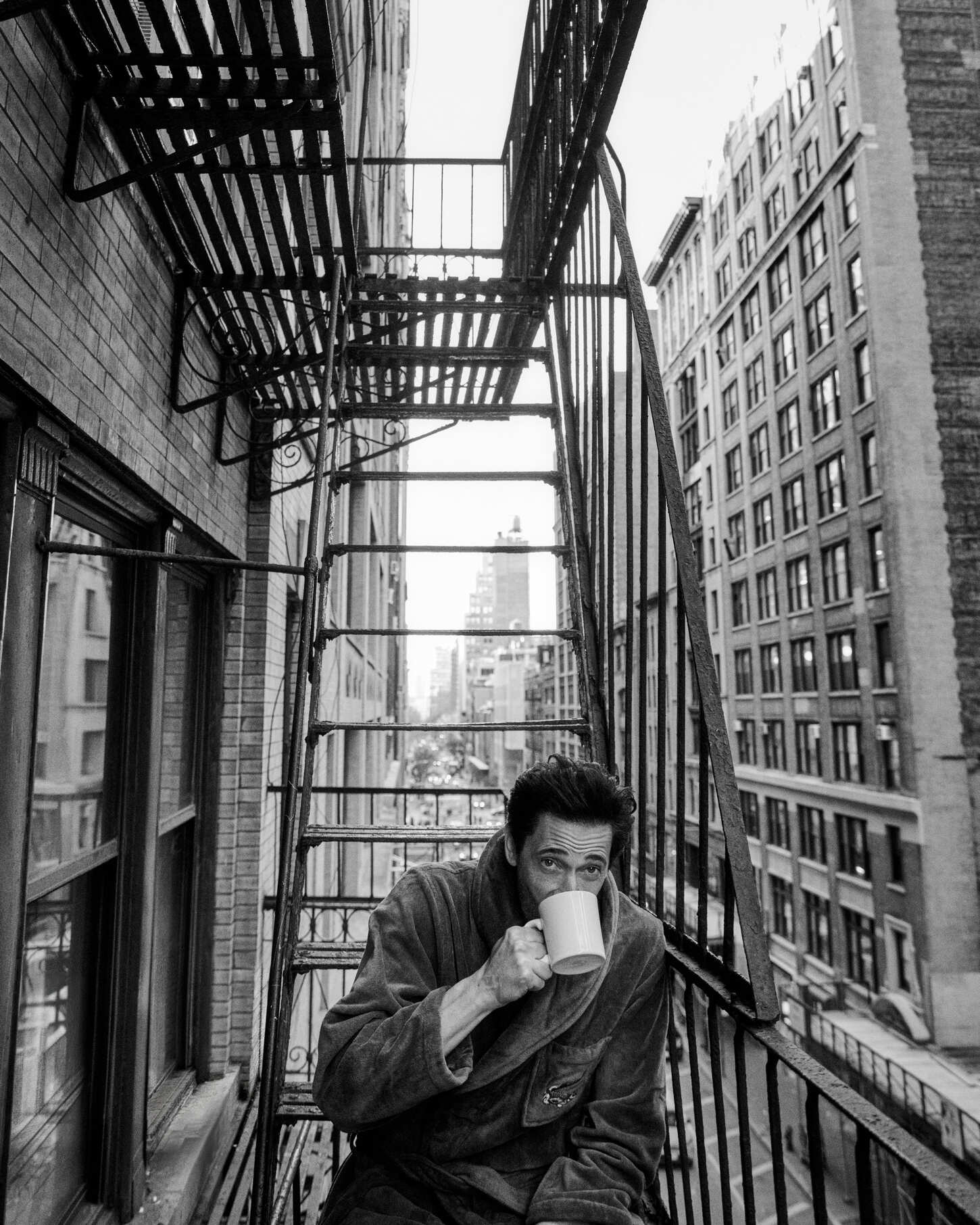
Brody was a tad late to our virtual meet-up due to technical difficulties – he couldn’t get Microsoft Teams working. “It had me in safe driving mode, and I’m not even driving,” he sighs, ever-so-slightly irked as we convene on a last-minute Zoom link. His camera remains off, but he’s in otherwise great spirits despite the digital setback, primed to dive in for a good ol’ fashioned chat – just me, him, a publicist or two in the background, and his two dogs. There is Ziggy, named presumably in Bowie’s honour, though I can’t be sure. And László, who Brody confirms is eponymic of the character who enriched his career last year. László Tóth, the Hungarian-Jewish architect and flawed protagonist in Brady Corbet’s sprawlingly epic and breathtakingly ambitious three-and-a-half-hour oeuvre, The Brutalist.
Following up a year like 2025, in which Brody returned to the Oscars lectern to pick up the second of his gold statuettes – the first came in 2003 for The Pianist – could be a tall order. He’s had a less visible and more modestly-paced opener to 2026, “bopping around a bit, trying to get myself all settled in,” he tells me. But as he explains, he’s now “preparing to start a whole new journey.” This fresh endeavour is his hotly anticipated in-road into Broadway, reprising his role as Nick Yarris in The Fear of 13, the production that in its 2024 London debut marked Brody’s first stage role in 30 years.
Written by Lindsey Ferrentino (Ugly Lies the Bone) and directed by Tony Award-winner David Cromer (The Band’s Visit), Brody leads as Yarris, a Pennsylvanian man wrongfully put on death row for 22 years for a murder he didn’t commit. Based on real events, Ferrentino’s interpretation was inspired by a 2015 British documentary of the same name, and was embraced by audiences at the 251-capacity Off-West End Donmar Warehouse in autumn 2024. Now, the play finds its second home on Broadway, with Brody featuring alongside the addition of Golden Globe-nominee Tessa Thompson (Creed, Hedda, Avengers: Endgame), in a substantial run of shows from March to July.
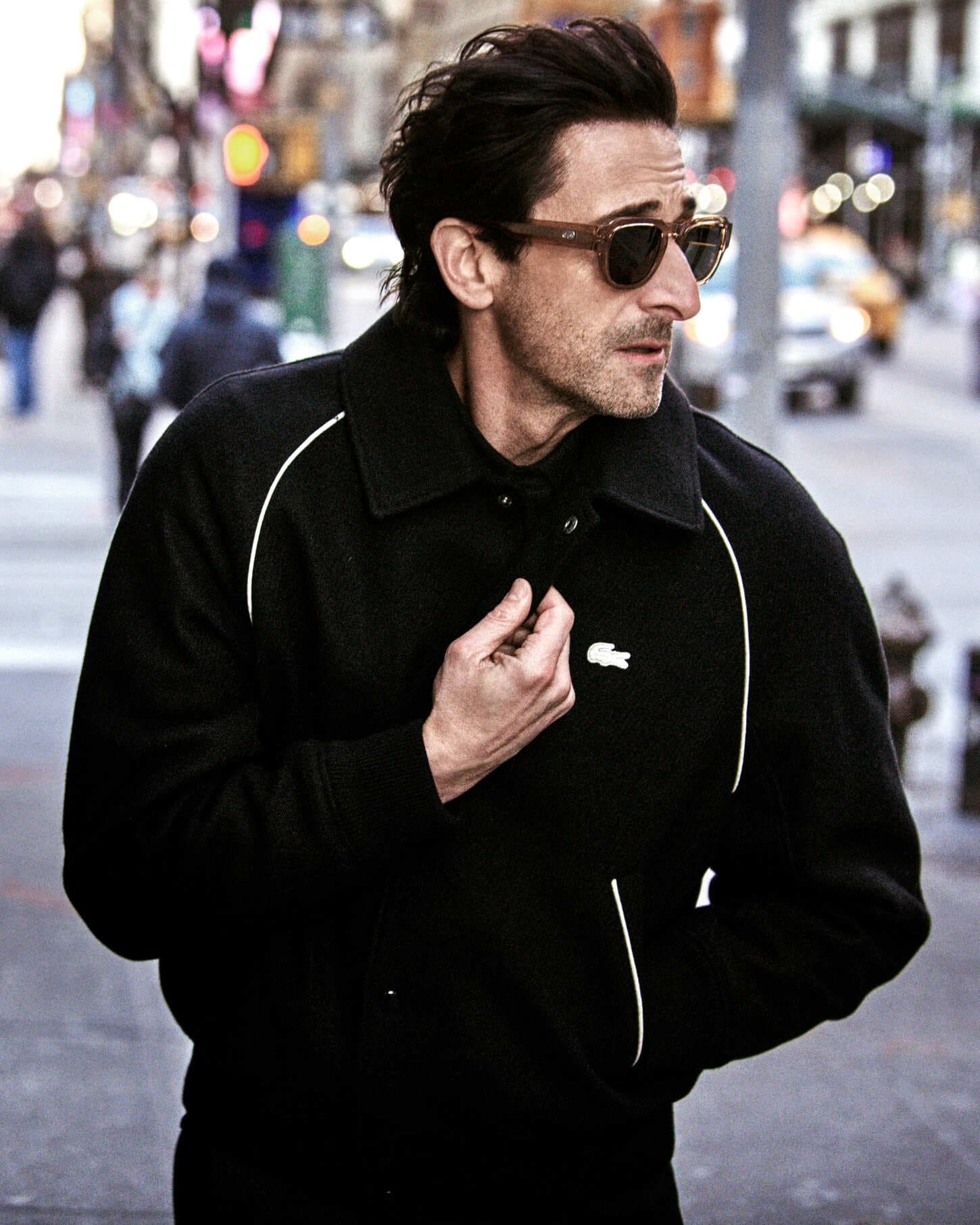
Adrien wears full looks by LACOSTE
Although I’m staring into a blank screen as we converse, Brody’s instantly recognisable rich, distinct, layered tone: a thick base of Queens, New York, with the occasional Eastern European inflexion (thanks to his mother and father’s roots in Hungary and Poland, respectively), brings with it more than enough bewitching lore. These are the pipes behind the voice of Luca Changretta, the tyrannical Italian-American crime mafioso from Season 4 of Peaky Blinders. They’re those responsible for the timbre of shifty billionaire Josh Aaronson in Succession, and the panicked pants of Jack Driscoll in Peter Jackson’s King Kong. You might consider Brody, too, among the most recognisable instruments in Wes Anderson’s zany orchestra, having starred in five of the auteur’s films, including The Grand Budapest Hotel and The French Dispatch.
On screen, his lean facial structure, angular nose, piercing green pupils, and ruffles of thick black hair ensure he’s as striking by eye. His compulsive, uncontrollable performance and indomitable desire to surprise emanate a compellingly unorthodox and utterly watchable movie star. He’s unique and, in many ways, peerless in his approach to the craft of acting. In fact, there are many parallels in where Brody and Lacoste sit in their respective worlds. Both are off-kilter disruptors to the more obvious mainstream choices – the effortlessly cool cousin who arrives late to the family party and immediately draws the room’s attention.
“I’ve felt that in many ways over the years,” he agrees on his commonalities with Lacoste. “It’s not for me to say where I fit in or where I stand, but I strive for those values – to play hard, but to be elegant with the work. To find a sense of restraint and a degree of austerity in how things are conveyed. And I think there’s a lot of that within the brand ethos of Lacoste.”
Lacoste’s ceaseless intentionality mirrors Brody’s self-determinism. There’s no half measures for him; to each role he has played, he gives up a segment of his soul. He’s devoured by his fictional counterparts and has learned and grown from the breadth of them, amassing passions and perspectives at each passing checkpoint. “It’s very interesting how your work influences a lot of your interactions and the way you view things,” he reflects. “Because you gain insight into things, in a style of aesthetic, or an appreciation of architecture or music. Anything in life that has grown through your research and immersion as a character only makes you a more complete person with a greater understanding of all these forms of expression. And how they may intersect and inspire you, or not. It’s a big part of what I do that I’m always very grateful for. I’d have had a very different life without the exposure through my work.”
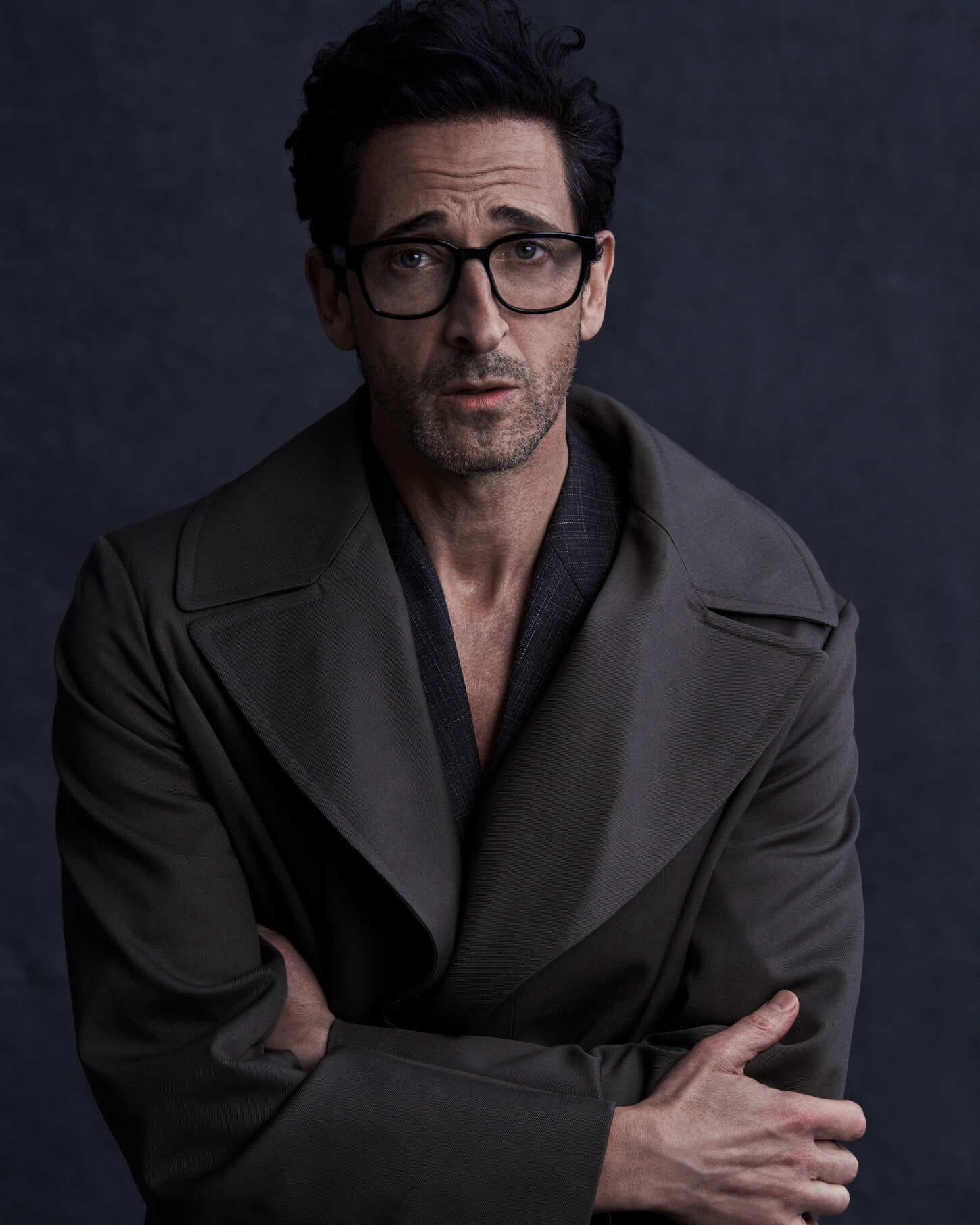
Adrien wears full looks by LACOSTE
While he is grateful to have gained acumen from his career’s colour wheel, there are shades of being a famous actor that Brody reveres less. Celebrity is something that Brody has long been disillusioned by. Outside of his partnership with Lacoste, he’s rarely seen in brand campaigns. He has a long-term partner, the designer and actor Georgina Chapman, and two step-children. Purposefully private and intentional in the way he does enter the public eye when his creative pursuits demand it, he’s managed to maintain autonomy, as a person and as a performer, throughout news cycles and gossip columns. “Well, it’s all a balancing act,” he chuckles when I congratulate him on the feat. “It’s your work choices – and they’re all work choices.”
That’s not to say he holds disdain for the boons of his industry standing. He’s not averse to getting glammed up for an awards ceremony. At 2025’s Oscars, he turned heads with a Giorgio Armani tuxedo, adorned with an Elsa Jin feathering brooch right of his right lapel. “I’m trying to lay low for the most part and stay creative, and get involved with things that are deeply fulfilling, but it’s fun to dress up when you have a triumphant moment in your career,” he explains. “When you also have a responsibility to be an ambassador for the film project you’ve done and your own work and how the two intersect, it’s great to have clothing that empowers you to do so.”
Such celebratory occasions have featured at both ends of Brody’s career to date. He sits in an exclusive coterie of performers, alongside Hollywood’s biggest names like Robert De Niro, Tom Hanks and Denzel Washington, as a two-time Oscar winner. You could argue that Brody has given two of the top ten male central performances in 21st-century cinema. First, as the Jewish musician Władysław Szpilman in Roman Polanski’s war tragedy, The Pianist. He depicts the torn-apart, starving Szpilman absconding from the Nazis’ genocidal reign with the kind of delicate intimacy and piercing pain that typifies an actor wholly giving themselves to their performance. It’s visceral, instinctive, cerebral, and justly won him the gong in 2003, upsetting two titans who were favourites that season – Jack Nicholson and Daniel Day-Lewis. At the age of only 29, the win made him the youngest man to ever win the paramount prize in screen acting – a record he still holds to this day.
His second triumph, which came following more than two decades largely away from the awards circuit, saw Brody invade the status quo again, this time for his role in Brady Corbet’s magnum opus, The Brutalist. A film that, as Corbet told me for his Man About Town feature last year, “was a bit like smuggling a baby across the border” – its lengthy battle to raise funding, its mere 34-day production schedule, and initial dismissal by the industry’s mainstream made it feel like a pipe dream. It was “very difficult at times,” the director recounted. “We faced a lot of adversity.”
It cohered, therefore, to have a figure like Brody at the crux of it. It was a redemption role of sorts, a return to the industry’s pinnacle, grounded in a character who was remarkably close to home – Brody’s grandmother lived in Nazi-occupied Budapest during World War II. His mother, the photographer Sylvia Plachy, escaped her home nation, Hungary, during the nation’s revolution in 1956, fleeing to New York, just like Brody’s character, László.
It’s well documented that the rewards for his involvement in The Brutalist were vast. Yet that outcome was far from a safe bet. A divisive director (Corbet’s previous film Vox Lux opens with a school shooting and was polarising among critics) making a three and a half hour epic about an architect on VistaVision (a filming format that had not been used in decades), on a shoestring budget in barely more than a month, with an ingrained 15-minute interval – it could easily have been a recipe for disaster.
But the risk paid off. The film was universally acclaimed, heralded as one of the best of the year. Brody’s performance was seminal. But what drove him to want to do it? “One thing that I’ve learned is that you know when your instincts are good,” he says. “And if you’re in tune with that, you can follow a path more clearly. You know what your dependencies are, what to look for, what to listen to. Oftentimes, we know the answer to many things, but we convince ourselves otherwise, or we allow someone else to convince us otherwise. But, at times, we’re intimidated by things that we know are the best decision, and that is a fight or flight instinct. You can’t allow that to guide you as the truth.”
For Brody, his decisions centre on finding truth within impulse – a creative career, after all, hinges on judicious choices. “The more experience you have with life, and with those specific decision-making skills, the better and more confident you become in owning up to those decisions,” he continues. “There are windows when there is a lot of distraction, and there are windows when there’s more time to be clear. But regardless, you have to try and see through the noise and focus on what’s important and what’s going to be most meaningful. And that’s a daily meditation.”
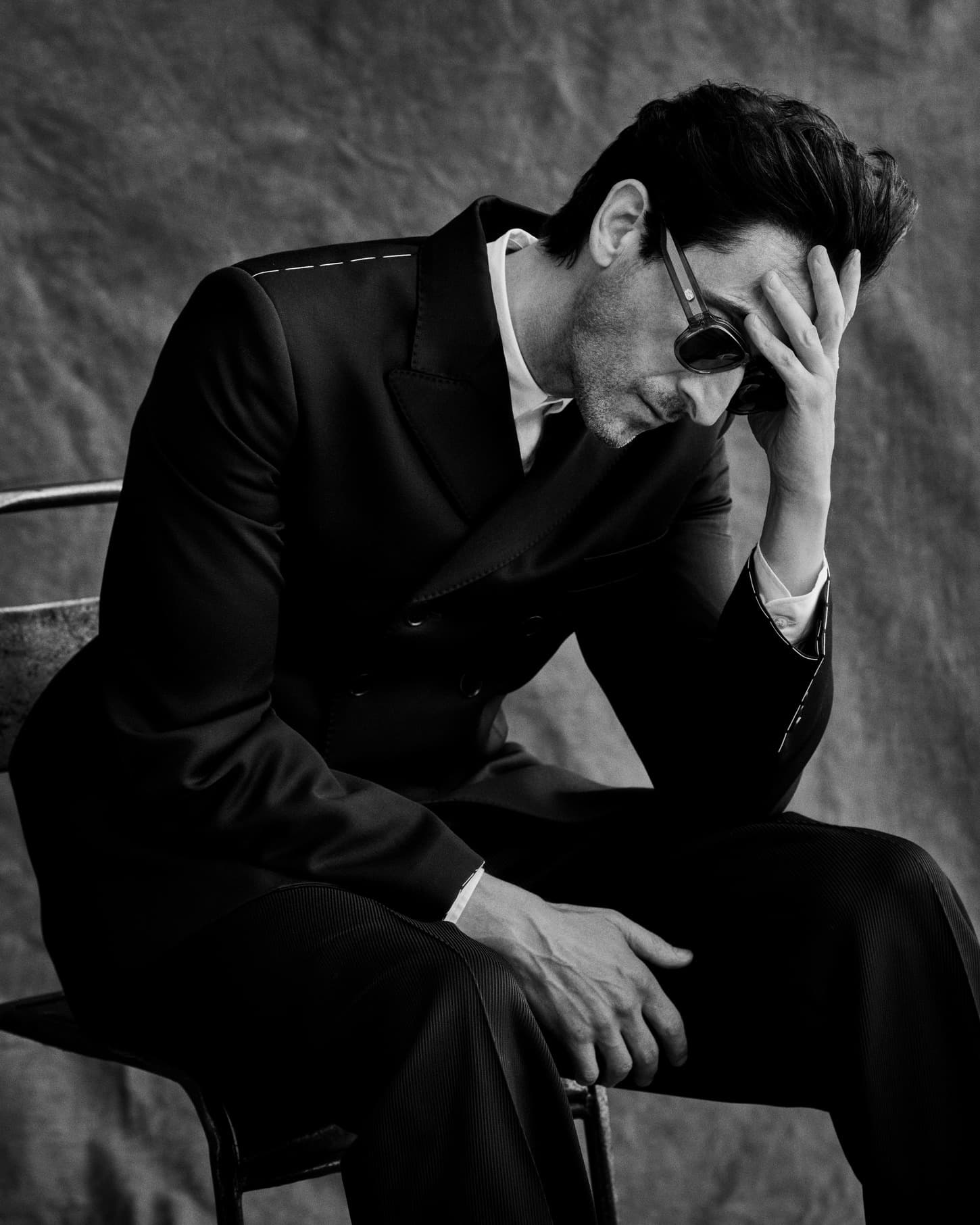
Adrien wears full looks by LACOSTE
Brody is now at a point in his career, thanks to The Brutalist, and his strong run of roles elsewhere in the 2020s (including that Emmy-nominated turn in Succession and part in Anderson’s Asteroid City), to be more refined in his role-picking. His partnership with Lacoste helps usher in the next era, too, giving him stability and objectives away from the screen. “By collaborating in this capacity, it’s also affording me time to be more selective with my other work,” he says. “And I don’t have to take roles that aren’t necessarily inspiring or are motivated by the wrong reasons. They work wonderfully for an actor who, for the most part, has always yearned to do interesting, diverse, independent films, which is wonderful work when you find the right work, but you have to be sparing. At any point in one’s career, you have to navigate those choices quite seriously. So collaborating and doing things that are uplifting and provide you with a place to do that are very welcome when they’re right.”
And, of course, acting is far from the only string to his bow. He’s an avid and adventurous artist – something inherent for him. While his mother’s professional life was rooted in image-making, his history professor father, Elliot Brody, taught himself how to paint in retirement. A young Adrien applied to study fine art at Fiorello H LaGuardia High School. He was rejected for the course, instead accepted to study drama. But painting has continued to be a creative outlet, and something which he’s pursued more fervently in the last few years, putting on an exhibition at EDEN House of Art last year, Made In America. To him, his artistic media cross-pollinate seamlessly – he’s even incorporated a few Lacoste labels into his pieces.
“I’ve been painting and drawing since before I was a professional actor. Fortunately, I got into drama school, and here we are, because I’d most likely be a starving artist,” he laughs. “My responsibility is to do things that I find creative and to share that work. The beauty of painting is that it affords a level of creative autonomy that isn’t attainable in a profession like making movies or getting on the stage, because [for those] you really require an army. And not only an army, but incredible generals and a support team to enable one to do that work. And if you choose to share it, you choose to share it.”
After his stint on the stage across the next few months, aside from returning to the easel, it seems likely that we’ll see Brody both leading and supporting major blockbusters and indie gems alike across the coming decade and beyond. There are rumours of him starring alongside Leonardo DiCaprio in Damien Chazelle’s forthcoming picture about daredevil stunt performer, Evel Knievel. One thing seems certain: he’ll have the eyewear to live up to his focus.
Faced with that regular predicament of stray specs, this global brand ambassador-ing sounds ever more lucrative. “Don’t worry,” Adrien Brody assures me, breezily. “I know some people.”
Photography by
Matthew BrookesStyling by
Luke DayMake-up by
Marco Castro at The Only AgencyOn-Ser Producer
Gillian AvertickStudio Manager
Ping PongDigi Tech
Zoran JelenicPhotography Assistant
Ivory SerraPhotography Assitant
Alonso EayalaStyling Assistant
Gabriel MancillaVideography by
Mylo ButlerSpecial Thanks to
Blonde Studios
![Picture of “[After Boots, People Said:] ‘You’re So Nice, I Can’t Believe That You Play Such A Freaky Sociopath’”: Angus O’Brien Is Marching On](/_next/image?url=https%3A%2F%2Fadmin.manabouttown.tv%2Fwp-content%2Fuploads%2F2026%2F05%2FANGUS-OBRIEN-hero-image.jpg&w=3840&q=85&dpl=dpl_s7wFmvZo5YcTNCjx5sb4PUUzKfcj)